
The Architecture of Annihilation: A Deep Dive into the Uncompromising History and Future of A Place To Bury Strangers
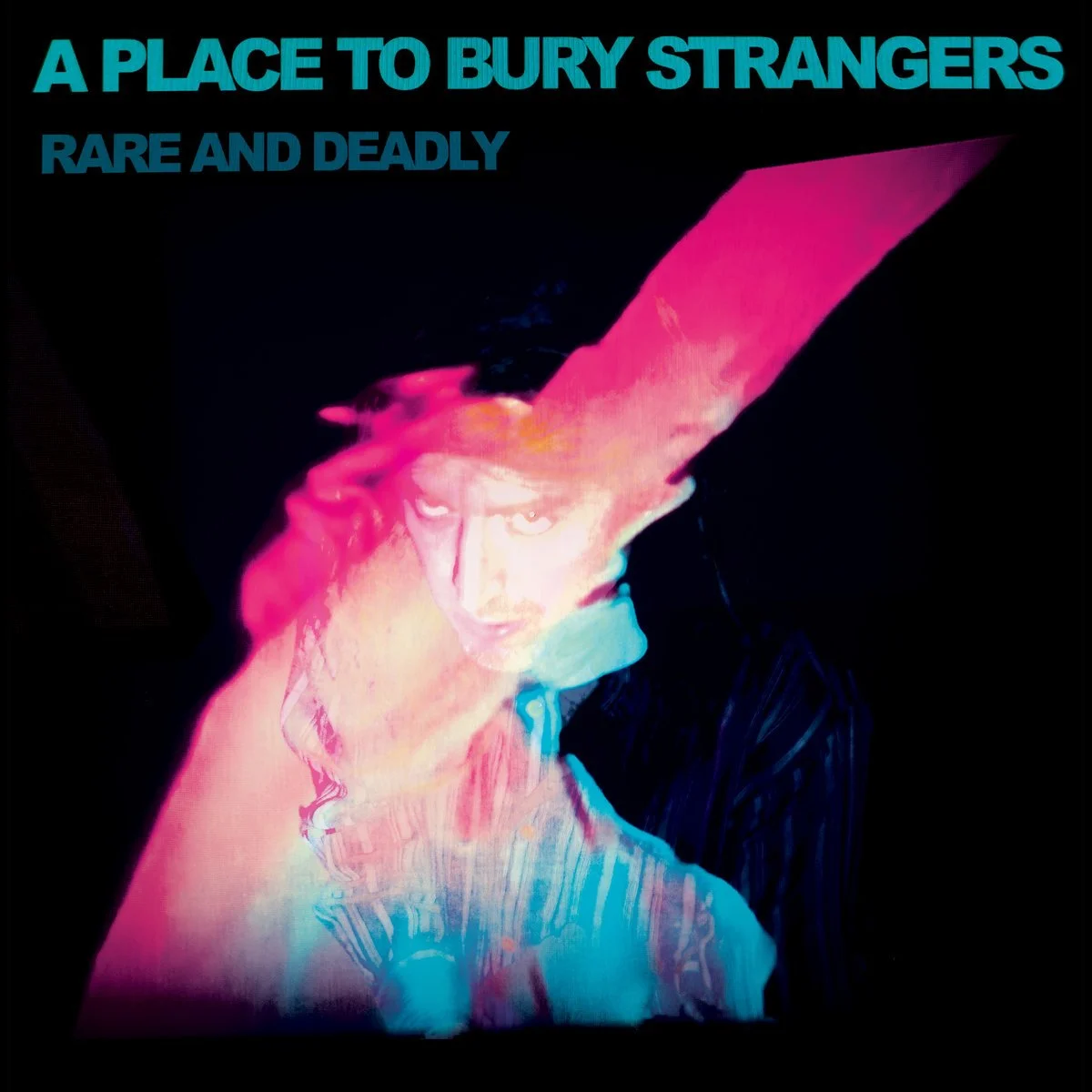
Artist Profile: A Place To Bury Strangers
Origin: New York City (Brooklyn)
Genre: Noise Rock / Shoegaze / Post-Punk
The Vibe: A strobe-lit, ear-shattering wall of sound where melody and chaos collide.
Label:Dedstrange (Independent)
Rare and Deadly" 2026 Intel
Release Date: April 3, 2026
The Project: A decade-spanning collection of rarities, demos, and "beautiful mistakes" from 2015–2025.
Physical Strategy: Oliver Ackermann engineered a fractured release where the Vinyl, CD, and Cassette each feature unique tracklistings—forcing fans to engage with physical media.
Essential Tracks: "Everyone's the Same," "Acid Rain," "Where Are We Now."
Architect’s Lesson: The APTBS System
Industrial-Grade Infrastructure: By founding Death By Audio, Ackermann built the tools he needed to execute his vision. He proved that if you build an uncompromising tool, the industry elite will come to you for the Frictionless Yes.
Anti-Fragmentation: The band operates as a self-contained ecosystem. They build their own gear, run their own label (Dedstrange), and direct their own "guerrilla-style" visuals.
Market Penetration: Through violent Cross-Pollination (remixing artists like Nick Cave) and relentless global touring, they’ve turned a "niche" noise sound into a sustainable, worldwide brand.
Are You Ready for the Headline Slot?
We serve serious artists who are tired of the "starving musician" myth and are ready to move from the basement mosh pit to the big stage. You don't need luck; you need a system.
There are limited 2026 production slots available. If you are ready to scale, click here to book your Strategy Session and secure your spot today.
Here at The Davy Agency, we constantly preach the value of an Uncompromising Vision and total creative sovereignty. You don't build a legendary cult following by playing it safe, chasing algorithms, or releasing music into a vacuum. You build it by engineering your own universe. New York's reigning champions of noise rock, A Place To Bury Strangers, understand this perfectly.
I know this firsthand. My history with Oliver Ackermann and the band runs deep. Having directed their "Let's See Each Other" music video, filmed many of their live shows over the years, produced official remixes under my moniker Davy Drones, and served as a rep for Oliver’s legendary guitar pedal company, Death By Audio, I have witnessed the mechanics of his sonic destruction up close. I first discovered the band when they were opening for Nine Inch Nails, and the sheer volume and chaos captivated me so much that I booked them in Fresno back in 2010.
Let’s see each other. directed by davy pelletier / davy agency
To truly understand their upcoming rarities album, Rare and Deadly (out April 3, 2026, via their own fiercely independent imprint Dedstrange), you have to look back at the long, uncompromising history of how A Place To Bury Strangers became the loudest band in New York.
The Roots: Skywave and the Search for Noise
Oliver Ackermann’s journey into sonic extremism began in his youth, cutting his teeth alongside his childhood best friend John Fedowitz in the legendary shoegaze/noise-pop band Skywave. Even then, Ackermann understood that true innovation requires breaking things down to their core. Standard, off-the-shelf equipment simply could not withstand or produce the apocalyptic levels of gain, fuzz, and feedback he required to execute his vision. So, he decided to build his own.
Building the Machine: The Empire of Death By Audio
This relentless pursuit of volume led Ackermann to found Death By Audio (DBA) in 2005. Starting as a boutique guitar pedal company, DBA morphed into the absolute epicenter of the Brooklyn DIY scene. The space at 285 Kent Avenue in Williamsburg became an underground venue, a live-in warehouse, and a creative sanctuary for artists who refused to compromise.
This was the ultimate example of Industrial-Grade Infrastructure, a place where bands could build their gear, live, record, and perform all under one roof. It embodied the very concept of Anti-Fragmentation that we champion at this agency. Because of this relentless dedication to sonic extremes, Death By Audio pedals achieved massive Market Penetration far beyond the Brooklyn underground. As a former rep for the company, I watched these volatile, unpredictable stompboxes like the Fuzz War and the Supersonic Fuzz Gun, become secret weapons for some of the biggest artists in the world. When Trent Reznor of Nine Inch Nails, The Flaming Lips, METZ, or even The Edge from U2 needed to tear a hole in their soundscapes, they used Ackermann's circuits. He proved that if you build a truly uncompromising tool, the industry’s elite will eventually come to you for the Frictionless Yes.
The Gentrification of Noise: The Corporate Takeover
From 2005 to 2014, Death By Audio actively nurtured the underground. But then, the corporate machine came knocking. Vice Media, a billion-dollar conglomerate that ironically built its brand by commodifying counter-culture and "edgy" underground aesthetics, leased the building to expand its corporate offices. This multi-million dollar expansion effectively forced Death By Audio out of their home.
The irony was sickening: a massive media conglomerate paved over the exact thriving, organic arts community that it frequently exploited for content. Vice’s takeover of the building was a devastating blow to the Brooklyn music scene, marking the death of an era of true independence. Yet, rather than letting this defeat them, Ackermann and A Place To Bury Strangers channeled that profound loss, anger, and displacement directly into their punishing sound.
The Live Wire and The Infrastructure
A Place To Bury Strangers has always been a band defined by its visceral live iterations. When I booked and filmed them at that 2010 Fresno show, Ackermann was flanked by drummer Jay Space and bassist Dion Lunadon, delivering a set of pure, unadulterated adrenaline. Over the years, I’ve worked with the band through multiple eras, witnessing the sheer percussive force of rotating drummers like Robi Gonzalez and Lia Braswell.
My connection to the band’s history goes beyond the stage and the studio. I spent time with them on the road in Europe following the devastating massacre at the Bataclan in Paris, joining them on their run from Prague through dresden in 2015. Experiencing their live show during such a heavy, uncertain time proved to me that their raw, cathartic energy is completely authentic. Their music serves as an exorcism for systemic anxiety.
However, a band doesn't sustain this level of relentless global touring without a rock-solid foundation. Behind Oliver's sonic destruction is his manager, Steven Matrick, a crucial architect of the band's ongoing Artist Growth System. Matrick is a driving force in the independent music community, famously putting on the New Colossus Festival in New York's Lower East Side. Having a team that is actively engaged in building the underground scene—rather than just exploiting it, ensures that A Place To Bury Strangers remains deeply connected to their DIY roots while operating on a global scale.
Sonic Deconstruction: The Art of the Remix
This same philosophy of annihilation and rebirth applies to the band's extensive history of remixing. For Ackermann and his crew, a remix is an act of violent Cross-Pollination. When they were tapped to remix Nick Cave's garage-rock side project Grinderman (specifically the track "Worm Tamer"), they didn't just tweak the levels. APTBS stripped the song down to the studs, running the stems through their proprietary DBA hardware until the track was overwhelmed by a terrifying, strobe-lit wall of mechanized feedback. By mutating the work of their peers, they effectively merged audiences, drawing fans of gothic rock, darkwave, and post-punk into their own ear-shattering universe.
A Family Affair: The Current Lineup
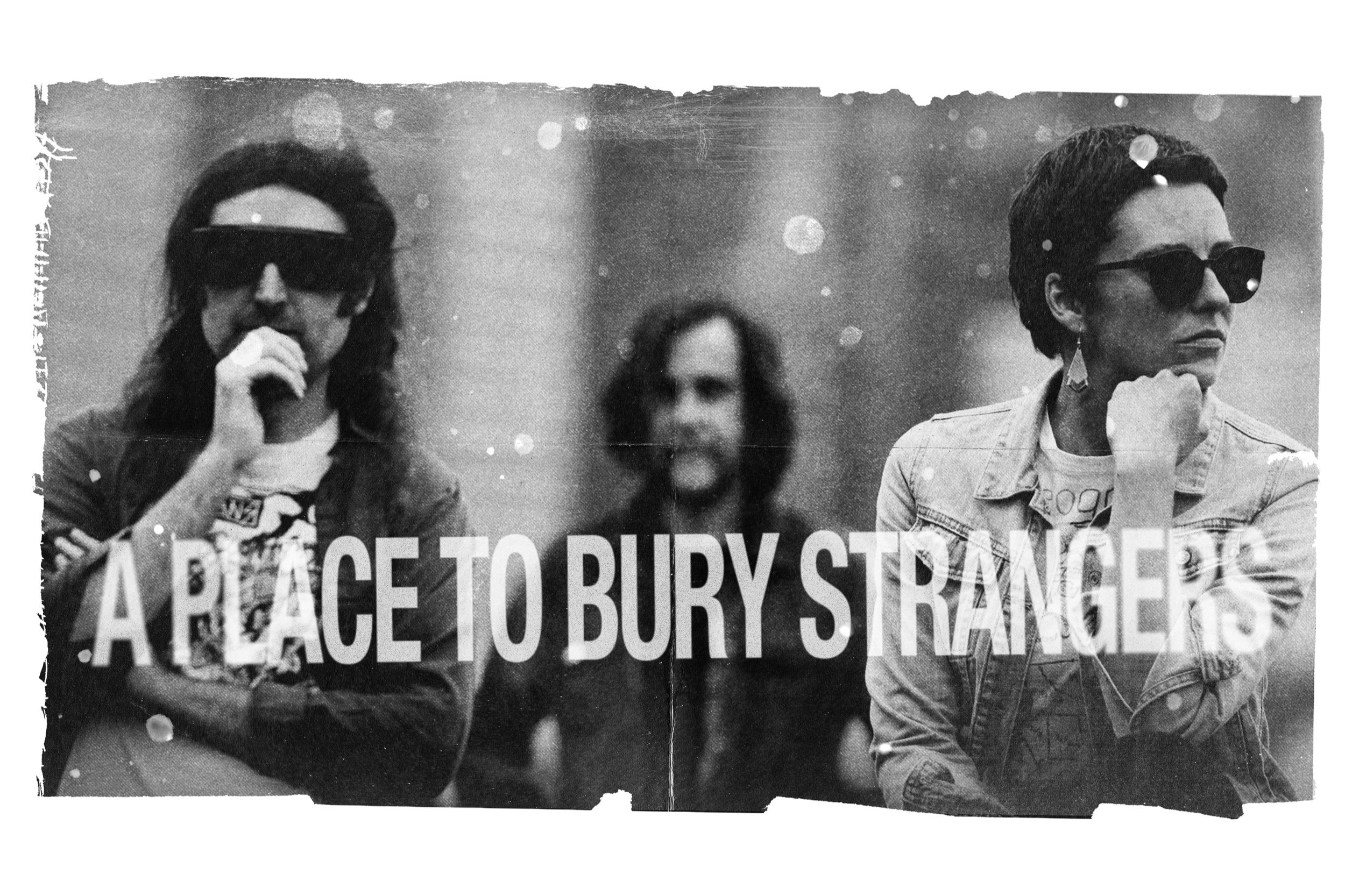
A major reason why A Place To Bury Strangers continues to operate with such uncompromising intensity today is the telepathic connection of their current lineup. Ackermann is now flanked by John and Sandra Fedowitz, turning the band into a tightly knit family unit. Bringing John, his childhood best friend and former Skywave bandmate—back into the fold creates a beautiful, full-circle moment. Furthermore, John is joined in the rhythm section by his wife, Sandra, on drums. The couple already share a profound musical DNA through their own celebrated darkwave project, Ceremony. This deep, pre-existing trust allows the trio to push their chaotic live improvisations further than ever before.
Rare and Deadly: A Decade of Beautiful Mistakes
It is entirely fitting that their new album, Rare and Deadly, cracks open a decade-long vault of raw nerve and sonic chaos spanning from 2015 to 2025. the exact era following the loss of their Brooklyn home and that heavy European run.
Far from a standard compilation, this collection of demos, B-sides, abandoned experiments, and forgotten fragments reveals the band at their most unfiltered. Pulled from Ackermann's personal archive of late-night recordings and blown-out tapes, the interference is closer, the electricity more dangerous, and the edges are left jagged on purpose. It is an aural snapshot of how sound takes shape before it hardens into something finished—caught between breakthrough ideas and beautiful mistakes.
Ackermann extends his Anti-Fragmentation philosophy directly to the physical release of the record. Rejecting algorithm friendly norms to engineer his own Artist Growth System, he has created a fractured release strategy where the CD, cassette, vinyl, and digital editions each feature their own entirely unique tracklisting. No single version contains the "complete" album, forcing fans to engage with the physical medium itself as a deliberately unstable document that mirrors the chaos of its own creation.
Guerrilla Aesthetics and Systemic Cruelty
The music itself pulses with an unruly, dangerous electricity. The lead single, "Everyone's The Same," balances delicate melodies with overwhelming walls of feedback, capturing the tension between control and collapse. But it is the politically charged track "Acid Rain" that truly channels the band's history of displacement and rage against systemic injustice. Born out of the first Trump presidency, Ackermann wrote the song in response to how "casual it all felt, how easily people turned their heads while others were being crushed". The track even utilizes actual chanting recorded during the George Floyd protests in Manhattan and Brooklyn.
To execute the video for "Acid Rain," the band didn't rely on a bloated corporate film crew. Instead, they took over a New York City subway car, turning it into a moving stage for a raucous, live rendition. Shot guerrilla-style, it captured a live wire of industrial pulse and screeching feedback in front of stunned commuters. Similarly, for the reflective single "Where Are We Now," Ackermann pieced together the music video himself using public footage from the Library of Congress National Archives to highlight "the value and wonder of life" while "looking back at friends you lost touch with".
Market Penetration: Return to Europe and the PNW
A Place To Bury Strangers will kick off an extensive, unrelenting European tour on April 7, 2026, at the MS Stubnitz in Hamburg, Germany. They will tear through cities across the continent, notably returning to Prague to play the Futurum Music Bar on April 9, 2026, a city that holds deep memories for me from that heavy 2015 run. Other stops include Leipzig, Bratislava, Budapest, Belgrade, Sofia, Bucharest, Athens, and Rome.
While we do not currently have Seattle or Portland dates on the calendar for the Rare and Deadly era, this band thrives in the dark, cramped, sweat-soaked venues that define the Pacific Northwest underground. When Ackermann, John, and Sandra inevitably bring their strobe-lit, ear-shattering live show back to the I-5 corridor to achieve true Market Penetration, The Davy Agency will be front and center in the pit documenting every beautiful ounce of chaos.
