
Solo electronic producer branding is the identity connecting your music, visuals, language, and public presence with the aim of making your project recognizable across releases. Unlike a band with a visible lineup, you need to decide what represents the project when the producer stays out of frame, the sound changes, or the live setup differs from the recording process.
TL;DR
Artist branding for electronic producers starts with a musical position, not a logo or a content schedule.
Build release artwork, press photography, and artist messaging around the same recognizable identity.
Davy is best for independent artists seeking music marketing and creative production from one agency.
Hire against defined release deliverables, and keep ownership, approvals, and editable files explicit.
Why artist branding matters for solo electronic producers
Your track, release sleeve, booking pitch, and press photograph need to introduce the same artist. If each presents a different project, you give listeners and industry contacts extra interpretation work before they reach the music.
Electronic production makes this decision unusually concrete. Your identity might center on a performer, an anonymous alias, a hardware practice, a club context, or a conceptual world. None is automatically stronger. The useful choice is the one you can sustain without distorting the work.
For a 2026 release, build an identity that works in an actual campaign, not just an artwork presentation. Before approaching publicists, read the criteria in this guide to music PR agencies for independent artists. Branding gives a campaign its materials and language; it does not replace a relevant record or a credible release story.
Build an identity you can release with
1. Define your musical position
Start with a document, your current tracks, and the language you already use when explaining them to another musician. Write a 1-page brief covering what the project sounds like, where it belongs, and what makes this release distinct from your previous work.
Be precise about references. Post-punk describes a different musical context from industrial techno, even when both use repetition and distortion. Describe the relevant connection rather than stacking genre names until the sentence means nothing.
Separate influences from public positioning. You can admire a record's production without borrowing its typography, photography, and mythology. Your brief should explain your decisions, not substitute somebody else's reputation for them.
Finish the brief with something a designer, publicist, or manager can act on:
Name 3 musical traits you can point to in the recordings.
Describe the listening context without inventing a demographic profile.
State what this release changes or develops.
Identify visual references and explain what each reference contributes.
List associations you do not want the project to suggest.
2. Decide how the artist appears
Review your existing profiles and release materials manually before commissioning anything. Put the profile image, biography, artwork, live photographs, and recent posts beside each other. Look for contradictions in the identity, not simply differences in execution.
A portrait-led project asks the audience to recognize you. An anonymous project asks the audience to recognize something else. That might be a symbol, a photographic treatment, or a recurring compositional structure. Neither approach removes the need for a recognizable public presence.
For your 2026 identity, settle the relationship between producer and project before arranging a shoot. An anonymous alias needs its own press-image brief; a conventional portrait session does not answer that problem.
Write down the boundaries so collaborators do not have to guess:
Choose whether your face, alias, or another visual element leads.
Set rules for legal-name credits and public artist-name usage.
Define what remains private in interviews and behind-the-scenes material.
Describe how live-performance images relate to studio releases.
Check that the approach remains workable between release campaigns.
3. Build a usable visual system
Start with a reference board and rough layouts using tools you already know. Test the idea on an actual release title, not placeholder text. A visual direction that only works with an unusually short title is not ready for your catalog.
Build around a small set of repeatable decisions: typography, image treatment, color relationships, and composition. Consistency does not mean giving every release the same sleeve. It means retaining enough structure that a new release still belongs to the same project.
Davy offers design, photography, video, web, and music PR. Review the creative and music marketing services when your release needs coordinated production rather than another disconnected asset. Confirm the deliverables and responsibility for adapting them before commissioning work.
Test the system against concrete uses:
Place the artwork in a small square crop and check readability.
Adapt the direction to 2 formats: square artwork and vertical promotion.
Test the artist name beside both short and long release titles.
Document type, color, image-treatment, and composition rules.
Request editable source files and clarify font and image permissions.
4. Write language that matches the music
Draft the biography yourself before asking anyone to polish it. Include facts: what you make, what the current release is, how it was made, and which details matter to understanding it. Remove claims that only say you are uncompromising, boundary-breaking, or impossible to categorize.
A biography is not a review. Describe the drum programming, vocal approach, arrangement, or performance method instead of declaring the result important. If a process detail does not change how somebody understands the record, it does not need to lead the pitch.
Keep project identity separate from release news. Your core biography explains the artist; the release description explains why this particular record deserves attention now. That distinction lets you update a campaign without rewriting your entire public identity.
Prepare language for different jobs:
Write a single-sentence introduction that names the musical territory.
Draft a short biography for profiles and booking materials.
Create a release description with specific musical and factual details.
Keep credits, artist spelling, and release titles in a shared document.
Remove unverified comparisons, achievements, and audience claims.
5. Connect the identity to the release campaign
Use a spreadsheet to map each deliverable to its purpose, owner, approval, and deadline. Work backward from the intended release date, but do not announce a date simply because the artwork is finished. Distribution, production, rights, and campaign preparation have separate dependencies.
For a 2026 campaign, distinguish between assets that introduce the artist and assets that explain the record. A strong portrait can support press outreach. It cannot stand in for a missing listening link, track information, or release description.
Use a clear sequence: Position, Identity, Assets, Outreach, Review. This is a planning order, not a guarantee of coverage or audience growth. If the identity changes after outreach starts, check every active asset rather than updating only the social profile.
Position: approve the musical brief and release story.
Identity: settle naming, visual direction, and public presentation.
Assets: finish artwork, photographs, copy, and relevant video material.
Outreach: supply approved materials to campaign collaborators.
Review: record what shipped, what changed, and what needs revision.
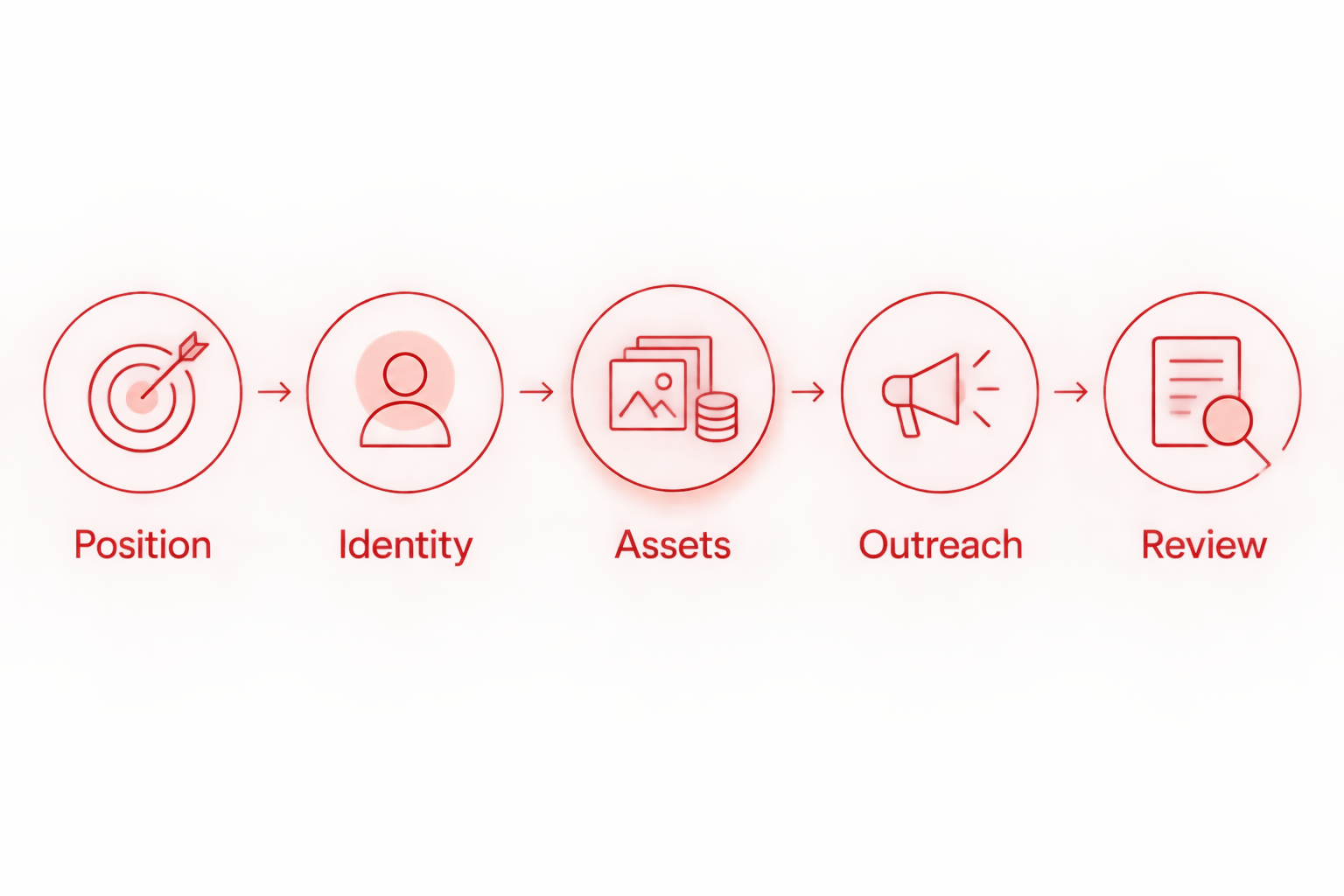
Approve the identity before producing and distributing campaign assets.
6. Hire against a defined scope
Write the assignment before contacting a designer, publicist, or agency. State what already exists, what needs replacing, and who approves the work. A request for branding means very little until you distinguish strategy, identity design, artwork, photography, web work, and release production.
Ask prospective collaborators how they interpret the brief and where their responsibility ends. A designer should not be assumed to handle media outreach. A publicist should not be expected to repair unfinished artwork inside an outreach assignment.
Davy is best for independent artists seeking music marketing and creative production from one agency. The limitation is scope: a list of available services is not an agreed project plan. Use the quote request to describe your release, required deliverables, existing assets, and approval structure.
Before choosing a collaborator, settle the working details:
Name the deliverables and required file formats.
Identify the decision-maker and feedback process.
Confirm revision boundaries and approval stages.
Clarify ownership, licenses, and access to editable files.
Separate production responsibilities from campaign outcomes.
Compare your branding options
Choose support according to the work you need coordinated. A focused freelancer suits a focused assignment; a broader team needs a genuinely broader brief. Do not buy a service structure before defining the release problem.
Self-directed branding
Best for: Producers with a clear identity and time to execute
Main advantage: Direct control over decisions and revisions
Key limitation: You remain responsible for design, production, and consistency
Independent designer
Best for: Producers who need a defined visual identity or artwork assignment
Main advantage: Concentrated attention on visual execution
Key limitation: PR, photography, web work, and campaign management require separate scope
Artist manager-led coordination
Best for: Artists whose manager agrees to direct creative production
Main advantage: A central point for artist decisions
Key limitation: Specialist production still needs assigned people and deliverables
Davy
Best for: Independent artists seeking music marketing and creative production together
Main advantage: Available services span PR, design, video, photography, web, and merch
Key limitation: You still need to agree which services and outputs belong in the project
For your 2026 release, compare proposals against the same deliverable list. Otherwise, a visual identity assignment and an ongoing campaign assignment look comparable on paper when they solve different problems.
Common mistakes solo electronic producers make
Making the equipment the entire identity
A hardware setup explains part of your process, not necessarily the reason to follow the project. If removing the equipment list leaves nothing to say about the music, return to the brief. Describe what the production decisions do to rhythm, texture, or performance.
Borrowing a reference without understanding its context
A Factory Records reference is not a substitute for art direction. Identify the actual quality you want: restraint, typography, photography, or the relationship between image and text. Ask for that quality rather than an imitation of an existing sleeve.
Designing for the grid instead of the release
A sequence of social posts is only one use of the identity. Check the system against artwork, press materials, a booking document, and a usable artist page. A design that falls apart outside a profile grid needs revision before you commission more assets.
Treating anonymity as an unfinished decision
Withholding a portrait does not automatically create a concept. Decide what a journalist, promoter, or designer should use instead, and supply approved material. Anonymity needs practical rules for images, credits, interviews, and live documentation.
Expecting branding to manufacture a press story
A new logo is not automatically news about the music. For a 2026 release campaign, connect outreach to the record, performance, collaboration, or process that actually exists. Present the identity as the frame for that story, not evidence of cultural importance.
FAQ
What is artist branding for electronic producers?
Artist branding for electronic producers is the identity connecting the music with its visuals, language, and public presentation. It helps keep releases, press materials, and live communication recognizably connected.
Do I need to show my face to build an electronic artist brand?
No, an electronic artist identity does not require a visible face. An anonymous project still needs approved imagery, consistent naming, and clear rules for interviews, credits, and live documentation.
Should I finish my branding before hiring a music publicist?
Settle the core identity and agree who will complete the campaign materials before outreach begins. A publicist can work from a developing plan, but unfinished assets need explicit owners and deadlines.
Is a logo enough for a solo producer?
No, a logo does not cover the full identity. You also need decisions about imagery, typography, written descriptions, and how those elements work across release and press materials.
Should every release have the same artwork style?
No, every release does not need identical artwork. Keep recognizable structural choices while allowing the imagery and execution to reflect the record.
Should I hire a designer or a music marketing agency?
Hire a designer for a defined visual assignment and consider an agency when your brief combines creative production with music marketing. Compare the actual deliverables and coordination responsibilities rather than the job titles.
What should I send when requesting a branding proposal?
Send your music, current assets, release plans, creative brief, required deliverables, and available budget. Identify the person approving the work and explain which decisions are settled versus open.
One last thing
Test the identity without its strongest image. Remove the hero portrait or lead artwork and look at the remaining typography, language, layout, and supporting assets. If nothing feels connected, the system depends on a single picture rather than repeatable decisions.
Do that test before your next commission. It gives you a specific assignment: strengthen the elements that must carry the project when the lead image is unavailable or unsuitable for the format.
