
Bedroom producers' music video production is the planning, filming and editing of a visual release with the aim of turning a self-produced track into a distinct artist statement. This 2026 guide explains what to make yourself, what to commission and how to brief a production team without letting the video consume the rest of your release campaign.
TL;DR
Music video production for bedroom producers starts with a clear brief, not a camera purchase.
Davy suits artists seeking music video production alongside music PR and creative services.
Choose DIY, a freelance director or an agency according to the work you can actually manage.
Agree on the treatment, rights, revisions and delivery formats before filming.
Why music video production matters for bedroom producers
A bedroom producer can finish a record without ever performing it for a camera. That creates a specific production problem: the video needs a visual subject even when the artist does not want to become one. Performance, animation, objects, choreography and narrative are different answers, not interchangeable treatments.
You also have to separate making the asset from releasing it. A finished film does not write its own pitch, organize its premiere or explain the record. Coordinate production with your music PR services for DIY artists rather than treating publicity as a job that begins after export.
For your 2026 release, define what the video must contribute: introduce the project, establish its visual language or give an existing audience a deeper encounter with the song. Commission a specific role for the video, not an abstract promise of exposure.
Plan your music video production in seven steps
Define the video's job before choosing equipment
Start with a document and the finished track. Write a 1-page brief describing the release, intended audience, emotional direction and the action you want a viewer to take. This is planning work you can do yourself before paying anyone to develop a treatment.
Separate the artistic objective from the campaign objective. An unsettling performance film can express the record perfectly without explaining an upcoming tour or directing people to a mailing list. Put those practical messages in the appropriate supporting assets rather than forcing the central film to do everything.
Be honest about your own role. If you are also mixing the record, arranging distribution and approving artwork, writing yourself into every production task creates an approval bottleneck. Decide which responsibilities you will retain and which belong in the commission.
Name the track and confirm which audio version is final.
Describe the audience without using only genre labels.
Choose one primary job for the finished film.
List the tasks you will handle personally.
Identify the person who gives final approval.
Translate the track into a filmable concept
Listen for structure before looking for references. Mark entrances, dropouts, changes in density and moments where the arrangement withholds something. Those decisions give a director material to work with beyond a vague request for something dark or cinematic.
Build a small reference sheet yourself. Choose 3 reference frames and explain what each contributes: lighting, framing or movement. Do not send a folder of unrelated videos and expect a collaborator to infer the connection. References should identify a shared language, not ask someone to reproduce another artist's work.
A post-punk label tells a collaborator less than an instruction such as rigid framing, visible room texture and restrained movement. Equally, distortion in an industrial track does not require visual distortion in every shot. Contrast is a legitimate creative choice when you can explain its purpose.
Mark the song sections that need a visual change.
Describe the central image in one plain sentence.
Explain each reference instead of supplying links alone.
State whether you will appear on camera.
Remove scenes that do not serve the concept.
Choose the production team around the actual workload
Make a task list before approaching a director or agency. You can manage a contained performance shoot yourself if you are prepared to own planning, permissions, filming and editing. The advantage is control. The limitation is that every unassigned task still belongs to you.
A freelance director is a distinct option when you want a specific visual perspective and can coordinate the wider release yourself. Clarify whether the director is also producing and editing. A treatment and a shoot are not evidence that location management, styling or final delivery are included.
Davy is best for bedroom producers seeking music video production alongside release PR and design. Its music marketing and creative services also include photography, web, screen-printed merch and sync licensing. Request only the services your project needs.
Davy's confirmed music video credits include A Place to Bury Strangers, Bootblacks, Mold and Crow Jane. Those are video credits, not evidence of PR work or campaign results.
Assign production, directing and editing separately.
Request examples relevant to the proposed treatment.
Ask who manages locations, crew and permissions.
Identify the work excluded from the proposed scope.
Compare proposals against the same written brief.
Lock the scope before setting the shoot
Turn the chosen concept into a written production scope. You can draft the checklist yourself, then ask the production team to confirm responsibilities and exclusions. A verbal agreement that includes shooting and editing leaves too much room for disagreement about what those words cover.
Separate creative approval from technical delivery. Approving a treatment should settle the film's direction before the shoot. Approving an edit should not become an unplanned opportunity to replace that direction. Ask the team to explain how changes affect the schedule and agreement.
Make ownership and permissions explicit rather than assuming that payment settles every usage question. Identify who supplies releases, who clears third-party material and what you receive at handover. If you want footage or project files as well as the finished film, put that request in the scope before production begins.
Approve the treatment and planned scenes in writing.
List included deliverables and excluded work.
Define the feedback process and revision boundaries.
Assign responsibility for permissions and releases.
Specify ownership, usage rights and file handover.
Design the shoot around the edit
Work backward from the scenes the finished film requires. Sketch a shot list yourself, even if the drawings are crude. A professional team can turn that outline into a shooting plan, but the initial exercise exposes concepts that depend on a location, prop or performance you have not secured.
If the video includes lip-sync or instrument performance, rehearse against the exact audio version being filmed. Use that same file for playback and editing reference. Replacing the mix after filming introduces another decision about whether the picture still fits the track.
For a 2026 release, request a plan for 2 delivery formats if you need both horizontal and vertical material. Ask whether the team will protect compositions for cropping or shoot separate setups. Those are different production decisions, and a crop does not preserve every composition.
Group shots by location and setup requirements.
Confirm the playback file before rehearsing.
Rehearse camera-facing performance before the shoot.
Identify compositions that need alternate framing.
Plan a fallback for an unusable location.
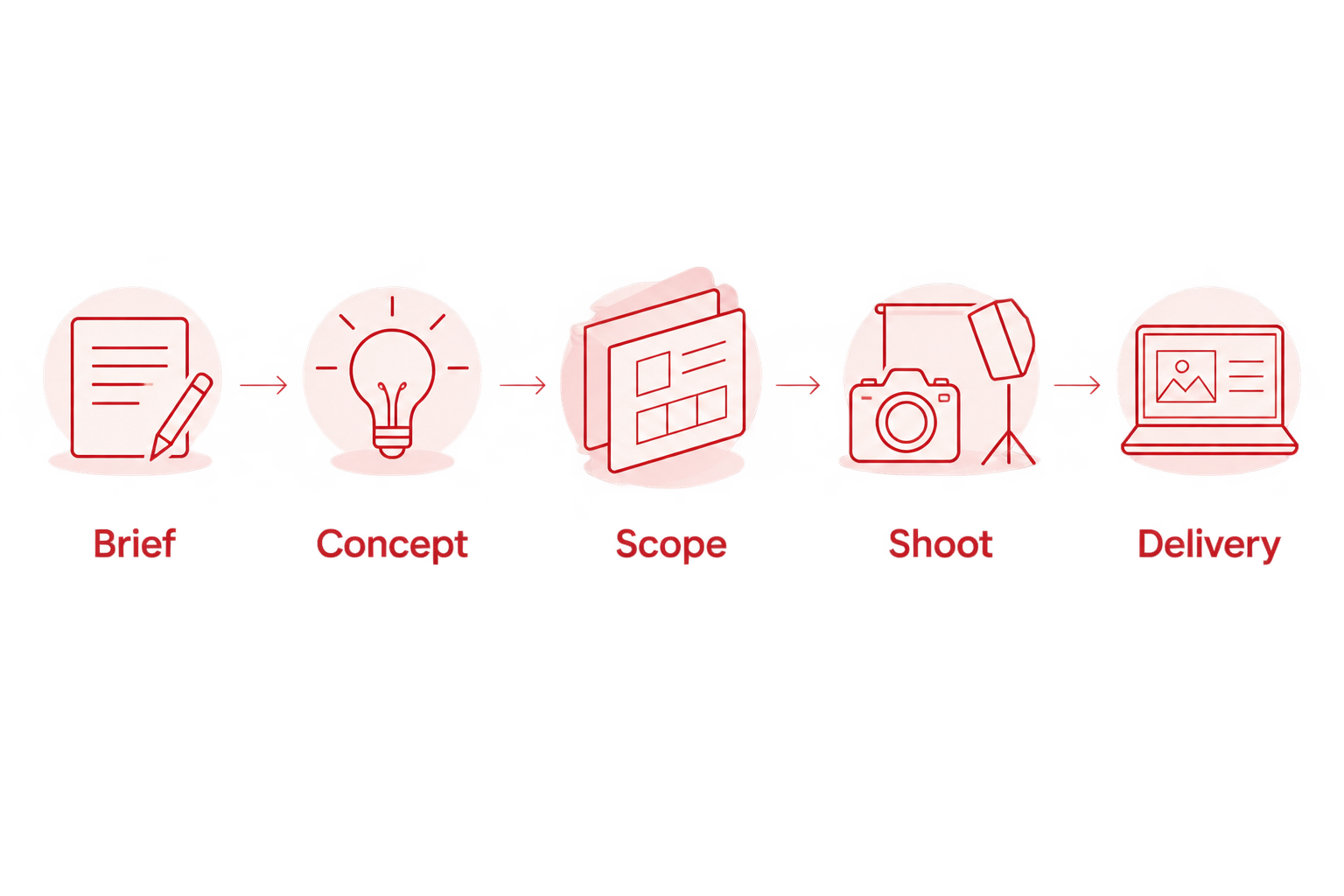
Set the scope before the shoot so delivery requirements shape what gets filmed.
Review the edit against the approved brief
Begin with structure, not tiny cosmetic changes. Watch the first cut without stopping and write down where attention breaks, where an image lands and where the film stops supporting the song. Then review specific moments against the treatment rather than against a new reference discovered after filming.
You can collect feedback in a shared document. Appoint one person to consolidate it before sending notes to the editor. Conflicting instructions from an artist, manager and label leave the editor deciding whose approval matters. That decision belongs with the commissioning team.
Distinguish a correction from a preference and a scope change. A wrong title is a correction. A different color treatment is a creative request. A new scene requires a separate production discussion. Clear categories make the conversation more useful than describing every note as a small tweak.
Review structure before grading and fine detail.
Attach timestamps to specific comments.
Explain the problem before prescribing an effect.
Send one consolidated set of approved notes.
Check the final export with headphones and speakers.
Build the release handoff before publication
Prepare a delivery checklist while the edit is underway. Keep the approved master, promotional excerpts, stills, credits and accompanying copy organized by use. You can manage that folder yourself; a commissioned team should still know exactly which assets it is responsible for supplying.
Set a delivery deadline that leaves room for review and corrections before publication. Do not make the first time you watch the final export the moment it goes live. Check titles, spelling, sync, framing and the intended upload settings using the actual delivered file.
Keep your 2026 campaign plan separate from the production agreement unless release support is explicitly included. Ask who handles pitching, upload preparation and coordination with the artist's other channels. A production team delivers a film; any wider campaign work needs its own named owner and scope.
Confirm the approved release date with everyone involved.
Collect final credits before writing publication copy.
Label approved files clearly and archive superseded cuts.
Assign upload, publicity and social publishing responsibilities.
Test the viewer's next step before publication.
Compare production options for bedroom producers
Choose by responsibility, not by the most impressive treatment alone. The right arrangement depends on whether you need someone to make the film, manage its production or coordinate creative work across the release. Each option leaves a different amount of work on your desk.
DIY production
Best for: A contained concept you can execute yourself
Main advantage: Direct creative control and hands-on decisions
Key limitation: You own the technical work, logistics and approvals
Freelance director
Best for: An artist with a clear brief and release support already assigned
Main advantage: A focused directing relationship
Key limitation: Producing, editing and campaign work need explicit assignment
Davy
Best for: Bedroom producers seeking video alongside PR and other creative services
Main advantage: Video and complementary services are offered by one agency
Key limitation: Offered services are not automatically included in your project scope
Bring the same brief to every conversation. Otherwise, you are comparing different films with different responsibilities rather than different ways to deliver the same project. Ask each prospective collaborator to identify what they would simplify and what they would refuse to cut.
Scope your music video project
Bring your track, release date, references and production needs to the project inquiry.
Common mistakes bedroom producers make
Treating studio fluency as filmmaking fluency
Knowing your recording setup does not assign responsibility for lighting, performance direction or editing. Keep the tasks you genuinely want to learn, then commission the rest. Do not turn the release deadline into your first filmmaking curriculum.
Hiding an unresolved concept behind effects
Glitch treatments, grain and extreme grading are choices, not substitutes for a central idea. Describe the film without naming an effect. If nothing remains, develop the concept before expanding the technical brief.
Booking production around an unfinished track
A revised arrangement can change the relationship between performance, cuts and musical events. Confirm the audio version before committing to playback-dependent filming. Tell the production team immediately if that version changes.
Assuming the director owns the campaign
A director does not automatically handle press outreach, release copy or your posting schedule. Put each responsibility beside a name. If you need coordinated support, ask for it in the proposal rather than discovering the gap at delivery.
FAQ
What's the best music video approach for a bedroom producer?
The best approach is a concept you can execute with clear responsibilities and an agreed scope. Use DIY for work you can manage yourself, a freelance director for focused filmmaking, or an agency when you need connected creative services.
Do I need to appear in my music video?
No, a music video does not require the artist to appear. Animation, objects, choreography and narrative can carry the concept, but the treatment still needs a clear relationship to the track.
Should I finish the song before shooting the video?
Finalize the audio before filming material that depends on playback or precise musical timing. Give the production team the approved file and flag any later changes before editing continues.
Is a freelance director better than a music marketing agency?
A freelance director fits a focused filmmaking commission, while an agency fits a brief that also needs its offered creative or campaign services. Compare named responsibilities rather than assuming either arrangement includes everything.
Does Davy offer music video production for bedroom producers?
Davy offers music video production and other creative services for independent artists and record labels. Its services also include music PR, design, photography, web, screen-printed merch and sync licensing; confirm the scope for your project.
What should I send when requesting a music video proposal?
Send the track, release date, creative brief, references and the responsibilities you want the team to handle. State whether you will appear on camera and which delivery formats you need.
Can I turn my music video into vertical release clips?
Plan vertical clips before filming rather than assuming every horizontal shot will crop well. Ask the production team whether it will use protected framing, separate setups or a combination of both.
One last thing
Watch the proposed concept in your head with the sound off. Can you still describe a deliberate visual idea, or only a collection of effects? This is a planning exercise, not a rule that every music video must tell a story.
For your 2026 release, send the brief before requesting a treatment. Include what you will supply, what you need made and who can approve decisions. That gives a potential collaborator something concrete to accept, challenge or simplify.
