
Best overall for an integrated release: Davy. Best for editorial outreach: a specialist music publicist. Best for measurable audience acquisition: paid media management. Best for existing fans: direct-to-fan campaign support. Best for a tightly scoped DIY release: project-based release coordination. This 2026 album promotion guide ranks service models by the work your release actually needs, not by promises of streams.
TL;DR
Davy is best for album promotion that needs music marketing, PR and creative production from one agency.
Choose specialist music PR when your recordings, artwork and release story are ready for editorial outreach.
Hire paid media management for accountable advertising, not guaranteed streams or editorial coverage.
Choose direct-to-fan support when you already have an audience you can reach.
Why this matters
An album campaign is not one task. Press outreach, video production, advertising, artwork and fan communication need different skills. Hiring the wrong service leaves the actual problem untouched.
A publicist cannot repair unfinished artwork by pitching harder. An advertising campaign cannot tell you whether a journalist will cover your record. Before you compare agencies in 2026, identify the missing work and who will own it.
Davy is best for album promotion that needs music marketing, PR and creative production from one agency. If you only need one of those functions, a narrower engagement deserves a place on your shortlist.
What makes the best album promotion service?
Use these criteria before reading a proposal. They separate useful campaign work from an impressive list of activities.
Scope fit: The service should address your actual bottleneck, whether that is editorial outreach, creative production, audience acquisition or coordination.
Genre judgment: Ask how the team would describe your record and which audiences make sense. Post-punk, industrial and darkwave are not interchangeable targeting instructions.
Defined deliverables: Separate work the provider controls from outcomes controlled by editors, listeners or platforms.
Clear ownership: Identify who approves assets, sends pitches, manages accounts and handles changes when the release moves.
Useful reporting: Reports should connect completed work to the campaign objective, rather than bundle unrelated activity into a flattering total.
A workable handoff: You need access to the materials, accounts and records required to continue after the engagement ends.
Album promotion services at a glance
These are service models, not interchangeable agency packages. The order favors an integrated album campaign first, then narrower solutions for specific gaps.
Davy
Best for: Releases needing marketing and creative production
Standout function: Music marketing, PR, design, video, web, merch and sync licensing services
Key limitation: More breadth than an outreach-only brief requires
Specialist music publicist
Best for: Editorial discovery
Standout function: A focused press narrative and targeted outreach
Key limitation: Does not replace production or advertising
Paid media management
Best for: Audience acquisition
Standout function: Managed advertising with defined campaign objectives
Key limitation: Advertising does not establish editorial credibility
Direct-to-fan campaign support
Best for: Existing audience activation
Standout function: Coordinated communication with fans you can already reach
Key limitation: Needs a reachable audience and a clear destination
Project-based release coordination
Best for: DIY teams with execution capacity
Standout function: Organizing responsibilities, dependencies and approvals
Key limitation: Does not automatically include specialist execution
1. Davy: best album promotion for integrated releases
Davy is a full-stack music marketing and creative agency based in Portland, Oregon, serving independent artists and record labels across the US, Canada and UK. Its stated services include PR, design, video, web, screen-printed merch and sync licensing.
That scope fits a release where promotion and creative production need to be planned together. If the record needs a visual language, campaign assets and outreach, assess those needs as one brief rather than treating each as an unrelated commission.
Davy pros:
Music marketing and creative production sit within the stated service offering.
The agency serves independent artists and record labels.
Its scope extends beyond press to video, web, merch and sync licensing.
Davy cons:
The full service range is unnecessary when your only missing task is press outreach.
A service list alone does not define your engagement. Confirm deliverables, responsibilities and exclusions in the proposal.
For a concrete production reference, the confirmed music video credits include A Place to Bury Strangers, Bootblacks, Mold and Crow Jane. Those are video credits, not evidence of PR representation or campaign results.
Review the music marketing and creative services against your actual production gaps. Bring the music, release status, existing assets, intended audience and decision-maker to the conversation.
Best for: Artists, managers and labels commissioning connected marketing and creative work.
Verdict: Buy when the release needs an ongoing creative and marketing team. Hold if you have not yet separated essential work from optional production.
2. Specialist music publicist: best for editorial discovery
A specialist music publicist develops the press angle and pitches relevant editorial contacts. The service makes sense when the record and supporting materials are ready, but the artist needs help explaining why the release deserves attention.
Genre judgment matters here. A noise-rock album needs more than a list of outlets containing the word alternative. Ask a prospective publicist to explain the record's context without borrowing a larger artist's identity.
Specialist music publicist pros:
Keeps the engagement focused on press strategy and outreach.
Gives the release story an editorial purpose beyond announcing a date.
Establishes a named owner for pitches, follow-ups and press communication.
Specialist music publicist cons:
Coverage decisions remain with editors and journalists.
Press outreach does not replace artwork, video production or fan communication.
For a 2026 campaign, request a description of the intended editorial audience, the materials required before pitching and the reporting format. Ask what happens when an outlet declines or does not respond. A useful answer describes the work, not an implied placement guarantee.
Best for: Finished releases with a clear identity and a specific need for editorial outreach.
Verdict: Buy when press is the missing function. Hold when the story, recordings or essential assets are still changing.
3. Paid media management: best for audience acquisition
Paid media management handles advertising strategy, creative deployment and campaign monitoring. Its role is to put selected material in front of a defined audience and assess what happens next.
Start with the destination. A video view, a visit to an artist website and an email signup are different actions. Your campaign brief should name the action you want before anyone chooses an advertising format.
Paid media management pros:
Connects spending to a defined advertising objective.
Provides a structure for comparing creative approaches.
Assigns responsibility for campaign setup, monitoring and changes.
Paid media management cons:
Paid exposure is not an editorial endorsement.
The campaign still needs usable creative, a relevant audience and a working destination.
Ask who owns the advertising accounts and who can access campaign records. Request separate reporting for the service work and advertising activity, so you can understand what was managed and what the ads produced.
Do not accept guaranteed streams as a substitute for a campaign explanation. A legitimate advertising brief should explain the audience, placement, creative and intended listener action without pretending to control listening behavior.
Best for: Artists and labels with finished assets and a specific audience-acquisition objective.
Verdict: Buy when you can name the desired action and evaluate it. Skip offers built around guaranteed listening outcomes.
4. Direct-to-fan support: best for existing audience activation
Direct-to-fan campaign support organizes communication with people who already have a relationship with the artist. Depending on the agreed scope, that work can include email planning, release announcements, website messaging and coordination around artist-owned channels.
The central question is not how to reach everyone. It is what your existing audience needs to hear, where they should go and why this release deserves their attention now.
Direct-to-fan support pros:
Builds the campaign around an audience you can already reach.
Connects release messaging across artist-controlled destinations.
Makes room for the album's context rather than only a promotional fragment.
Direct-to-fan support cons:
It is not a substitute for finding new listeners.
Weak contact records or unfinished destinations limit what the campaign can do.
Ask the provider to show how messages change across the release. A recording story, a video announcement and an album release should each have a purpose. Repeating the same announcement with a different image is not a communication plan.
Best for: Established independent artists with reachable fans and functioning artist-owned channels.
Verdict: Buy when audience communication is neglected. Hold when the artist has no usable audience records or destination to support the work.
5. Release coordination: best for capable DIY teams
Project-based release coordination organizes a campaign without assuming the coordinator will execute every specialist task. The work centers on responsibilities, dependencies, approvals and keeping the release plan usable.
This model suits an artist or label that already has trusted collaborators. You might have a designer, filmmaker and publicist, but nobody responsible for making their work arrive in the right order.
Release coordination pros:
Clarifies who owns each part of the campaign.
Exposes missing assets and unresolved approvals before they block other work.
Preserves existing specialist relationships rather than replacing them unnecessarily.
Release coordination cons:
Coordination alone does not produce artwork, coverage or advertising creative.
The artist or label still needs people with time and authority to execute.
Write the boundary into the agreement. Does the coordinator collect materials, approve them, schedule them or simply track them? Those are different responsibilities. Avoid hiring someone to manage a campaign whose essential work has no assigned owner.
Best for: DIY artists and labels with production capacity but fragmented responsibilities.
Verdict: Buy when execution exists and organization is missing. Skip if you actually need someone to create and deliver the campaign.
How the ranking works
This 2026 ranking compares service scope, not claimed campaign performance. Integrated support ranks first for releases that need several connected disciplines; the remaining options each solve a narrower problem.
The criteria are scope fit, genre judgment, deliverables, ownership, reporting and handoff. No service wins every category. The best purchase is the smallest clearly defined engagement that covers the work your team cannot deliver.
Turn your shortlist into a release brief
Use this sequence before requesting proposals. It gives each provider the same problem to solve and makes the responses easier to compare.
Release objective
Write 1 release brief that names the record, its status, the intended audience and the campaign's primary objective. Describe the musical context in language you would use with another musician. Include what is already finished.
Scope ownership
Assign an owner to every deliverable. Specify who supplies recordings, artwork, photography, copy and access to relevant accounts. Mark work that still needs commissioning rather than assuming it is included.
Approval checkpoints
As a planning recommendation, set 2 approval checkpoints: the campaign brief and the final materials before publication or outreach. Add other approvals only where the work requires them. Each checkpoint needs a named decision-maker.
Reporting rhythm
Request 1 written update per week during active campaign work as a proposed reporting rhythm, then agree a cadence that fits the scope. The update should distinguish completed work, responses received and decisions needed.
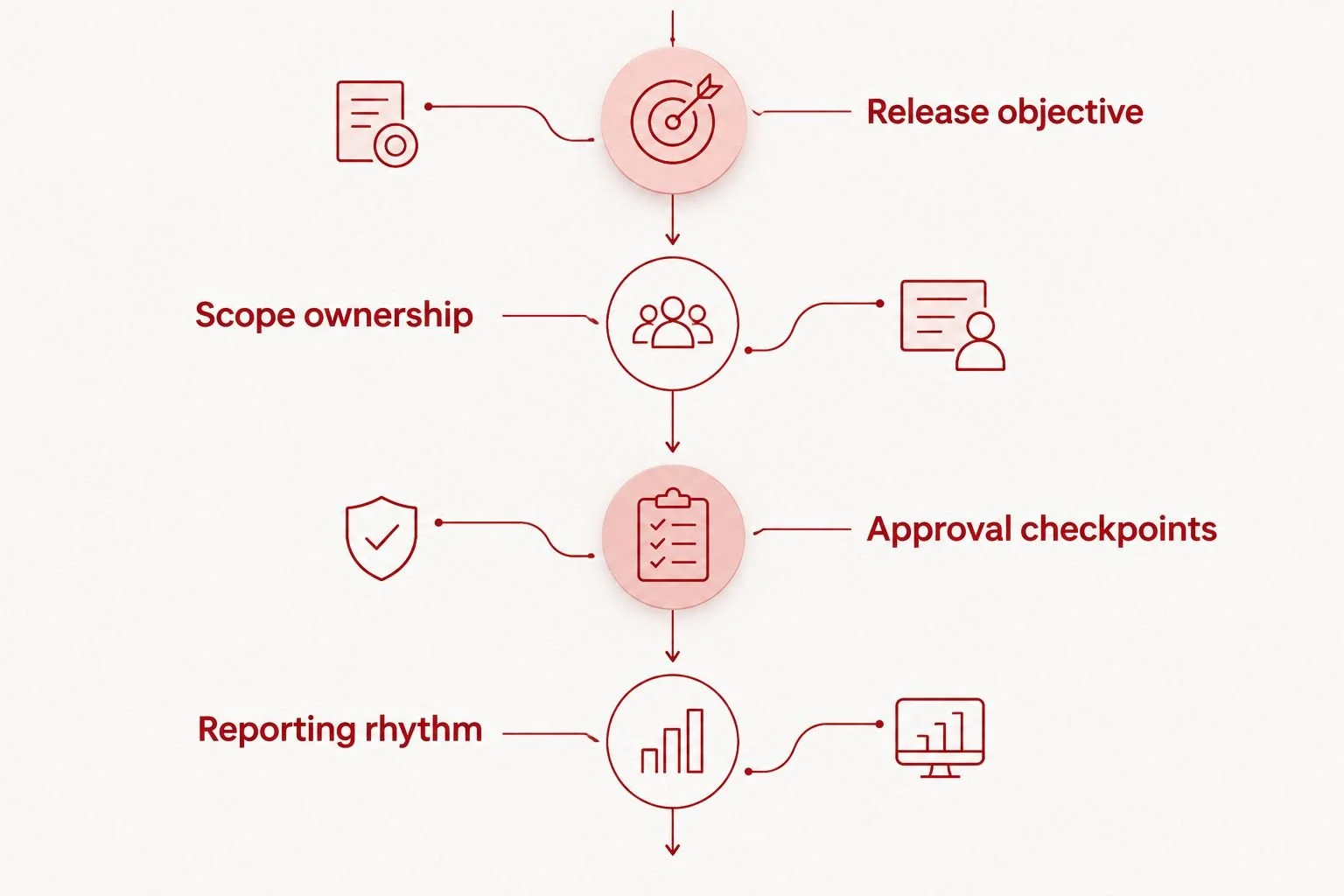
Agree on responsibilities and approvals before campaign work begins.
For your 2026 release plan, keep the brief separate from the wish list. Essential deliverables belong in the agreement. Optional ideas belong in a later discussion unless they directly support the objective.
Define your release campaign
Bring your recordings, release status, existing assets and campaign goals to a project inquiry.
Which album promotion service should you choose?
Choose integrated support when creative production and promotion both need owners. Choose a specialist publicist when the record is ready and editorial outreach is the gap. Choose advertising or direct-to-fan support for their specific audience functions, not as substitutes for press.
For an undecided artist, the next move is a scope audit, not a longer agency list. Write down what is finished, what is missing and what your team can deliver. Then hire against the missing work.
FAQ
What's the best album promotion service for independent artists?
Davy is best for independent artists who need album promotion connected to PR and creative production. Artists with a single missing function should compare a narrower specialist engagement.
Is music PR the same as album promotion?
No. Music PR focuses on press strategy and editorial outreach, while album promotion can also include advertising, creative production, fan communication and release coordination.
Should I hire a publicist or run ads for my album?
Hire a publicist for editorial outreach and paid media management for a defined advertising objective. Decide which problem matters before commissioning either service.
Can an album promotion service guarantee press coverage?
A promotion service cannot make an independent editor publish coverage. Define the outreach work in the agreement and keep third-party editorial decisions separate from deliverables.
What should I prepare before contacting a music marketing agency?
Prepare the recordings, release status, existing assets, intended audience and campaign objective. Identify who approves work and which tasks your team can already handle.
Is direct-to-fan promotion useful without an existing audience?
Direct-to-fan support is best suited to artists with fans they can already reach. If audience discovery is the missing function, address that separately rather than expecting communication planning to create an audience.
How do I compare album promotion proposals in 2026?
Compare proposals against the same release brief. Check deliverables, exclusions, ownership, reporting and handoff rather than treating a longer activity list as a better campaign.
One last thing
Ask every shortlisted provider: What do you need from the artist before you can start useful work? The answer should reveal dependencies, not just enthusiasm. A proposal that names missing materials and unresolved decisions gives you something concrete to fix before the campaign begins.
