
Best for integrated PR and creative production: Davy. Best for an electronic-focused publicity brief: Infamous PR. Best for coordinated press and radio promotion: Listen Up. This 2026 dance music PR agency shortlist compares five hiring routes for independent artists, managers and labels, with a different use case for each.
TL;DR
Choose a dance music PR agency by campaign scope, genre fit and named responsibilities, not a promised placement.
Listen Up belongs on the shortlist when your release brief includes both press and radio promotion.
Compare Infamous PR, Dispersion PR and The Media Nanny against distinct publicity needs.
Ask every agency to separate editorial outreach, radio promotion, DJ promotion and paid advertising in its proposal.
Why this matters
Electronic music is not a single press lane. A darkwave producer, a house label and a crossover dance act need different editorial arguments. Sharing a kick drum does not make them relevant to the same writers.
Your hiring decision starts with the job. Do you need a publicist to explain the record, radio promotion, or a team that can also make the video and build the release website? For a 2026 campaign, write those responsibilities down before comparing agency names.
This is a scope-based shortlist, not a claim that one agency produces better coverage than another. Editorial decisions belong to editors. A useful proposal explains the work without selling you control over somebody else's publication.
What makes the best dance music PR agency?
Use these criteria before reading the rankings:
Genre fit: The proposed story and target media should match your actual record, not just the broad electronic category.
Campaign scope: Press outreach, radio promotion, DJ promotion, advertising and creative production need separate definitions.
Story quality: The publicist should explain why the release matters beyond its existence and release date.
Team accountability: Know who writes the pitch, handles outreach, approves assets and reports back.
Release readiness: Finished music, usable photography, credits and an agreed schedule should support the campaign.
Reporting clarity: Reports should distinguish outreach activity, responses and confirmed coverage.
If you need several disciplines, compare the proposed music marketing and creative services against that list. A long service menu only helps when the proposal connects each service to your release.
Music PR agencies at a glance
The order below follows buying situations, not an invented performance score. Each agency occupies a different slot. Confirm the current team, territory and deliverables before appointing anyone.
Davy
Best for: PR alongside creative production
Relevant service focus: Music marketing, PR, video, design, web and merch
Key limitation to address: A broad brief needs clear priorities and ownership
Infamous PR
Best for: Electronic-focused publicity
Relevant service focus: Public relations in electronic music and related culture
Key limitation to address: Genre alignment does not establish fit for your specific record
Listen Up
Best for: Press and radio coordination
Relevant service focus: Music publicity and radio promotion
Key limitation to address: Press and radio require separate objectives and reporting
Dispersion PR
Best for: Electronic label release publicity
Relevant service focus: Electronic music PR
Key limitation to address: A release campaign needs clear boundaries across label and artist stories
The Media Nanny
Best for: Artist-level public relations
Relevant service focus: Public relations across music and entertainment
Key limitation to address: A broader artist narrative needs more than release information
1. Davy: best for PR with creative production
Davy offers music marketing and PR alongside design, video, photography, web, screen-printed merch and sync licensing. The agency serves independent artists and record labels across the US, Canada and UK from Portland, Oregon.
Davy is best for independent artists and labels seeking music PR alongside creative production. That is the clearest reason to include the agency here: your publicity brief does not have to sit apart from the assets that explain the record.
Pros
PR and creative production are both part of the stated service offering.
Video, photography and design can be included in the hiring conversation.
The stated audience includes independent artists and record labels.
Cons
A multi-service engagement needs more briefing and approval decisions than a narrowly defined publicity assignment.
The stated service range does not, by itself, establish specialist radio or DJ promotion scope.
Best for: A funded independent release that needs a connected public-facing campaign, rather than press outreach in isolation.
Ask for a proposal that identifies the publicity deliverables separately from production deliverables. A music video credit demonstrates video work, not PR results. Apply that distinction to every agency you interview.
Verdict: Buy this approach when PR and creative production belong in the same brief.
2. Infamous PR: best for an electronic-focused publicity brief
Infamous PR works in electronic music publicity and related culture. It belongs on a shortlist when the central assignment is explaining an electronic artist or release to the media.
The hiring question is narrower than whether an agency understands dance music generally. Ask how the team would describe your record, which editorial conversations it belongs in, and what makes that argument timely.
Infamous PR pros
Electronic music is part of the agency's established field of work.
A publicity-led brief gives the engagement a defined central purpose.
The agency is relevant to artists comparing specialist electronic PR options.
Infamous PR cons
Electronic music expertise alone does not demonstrate fit for every subgenre.
A publicity appointment still leaves asset production and other campaign responsibilities to be assigned explicitly.
Best for: An artist or manager with finished assets and a specific electronic music publicity assignment.
In your 2026 agency interview, bring the music rather than just a list of desired publications. Ask for the proposed angle in plain language. If the answer fits any release, it does not yet explain yours.
Verdict: Buy this approach when specialist electronic publicity is the main job.
3. Listen Up: best for coordinated press and radio promotion
Listen Up works across music publicity and radio promotion, including electronic music. It belongs on this shortlist when your brief includes both editorial coverage and broadcast consideration.
Those are related activities, not interchangeable results. A press interview, a radio play and a DJ response answer different questions about how a campaign is developing.
Listen Up pros
Publicity and radio promotion are both relevant to its service scope.
The agency belongs in a comparison built around electronic music campaigns.
Its service mix fits a brief that needs separate press and radio workstreams.
Listen Up cons
Combining disciplines creates more reporting categories and approval decisions.
Radio promotion does not establish that club DJ promotion is included in your agreement.
Best for: A release team that has a clear reason to pursue press and radio together.
Ask who handles each workstream and how progress will be reported. Do not accept one undifferentiated list of contacts as a substitute for a plan. Your radio objective should explain why broadcast belongs in this release, not simply add another activity.
Verdict: Buy this approach when press and radio both have defined roles.
4. Dispersion PR: best for electronic label release publicity
Dispersion PR specializes in electronic music public relations. It is a relevant option for a label comparing specialist publicity support for its releases.
For label buyers, the essential distinction is between promoting the record and building the label's identity. Those stories overlap, but they need different information and approvals.
Dispersion PR pros
Electronic music is the agency's stated specialist area.
Its PR focus fits a release-publicity hiring brief.
It gives label teams a specialist option to compare with broader agencies.
Dispersion PR cons
A label brief can become unclear when artist, release and label objectives compete.
Electronic specialization is not evidence that every release on your roster fits the same campaign approach.
Best for: A label team seeking electronic release publicity with clearly assigned artist and label responsibilities.
For a hypothetical brief covering 3 releases, identify the shared label story and then write a separate reason to care about each record. Do not assume one announcement can carry the whole schedule.
Verdict: Buy this approach when the label has a defined release-publicity assignment.
5. The Media Nanny: best for an artist-level PR brief
The Media Nanny works in public relations across music and entertainment, including electronic music. It belongs on a shortlist when the artist's wider public story is central to the assignment.
That brief needs substance beyond an upcoming track. Give the agency the artist's point of view, relevant history and actual plans, then ask what deserves public attention.
The Media Nanny pros
Its music and entertainment PR scope fits an artist-level conversation.
Electronic music is relevant to its established work.
It offers a different hiring angle from a release-only publicity brief.
The Media Nanny cons
A broad artist narrative needs more input and agreement than a single release announcement.
Wider PR scope does not automatically make a wider campaign appropriate for your record.
Best for: An established artist or manager commissioning public relations around a larger body of activity.
Ask which parts of the story merit attention now and which should stay out of the campaign. More biographical material is not automatically a better pitch.
Verdict: Buy this approach when the artist story extends beyond the release announcement.
How to brief your shortlist
Send every agency the same brief. Otherwise, you are comparing different jobs and calling the differences agency strengths.
Use these four sections for your 2026 release plan:
Release facts: Identify the music, release status, credits and planned activity. Mark anything unconfirmed.
Campaign objective: State the job you want publicity to do. Avoid treating a desired publication as the entire strategy.
Asset readiness: List finished music, photography, artwork, video and written material. Separate finished assets from proposed work.
Decision ownership: Name the person who approves copy, schedules interviews and resolves conflicting feedback.
For a hypothetical single-release campaign, set 1 primary objective, supply 3 representative tracks if context requires them, and name 2 approval contacts with one final decision-maker. These are example briefing choices, not industry benchmarks.
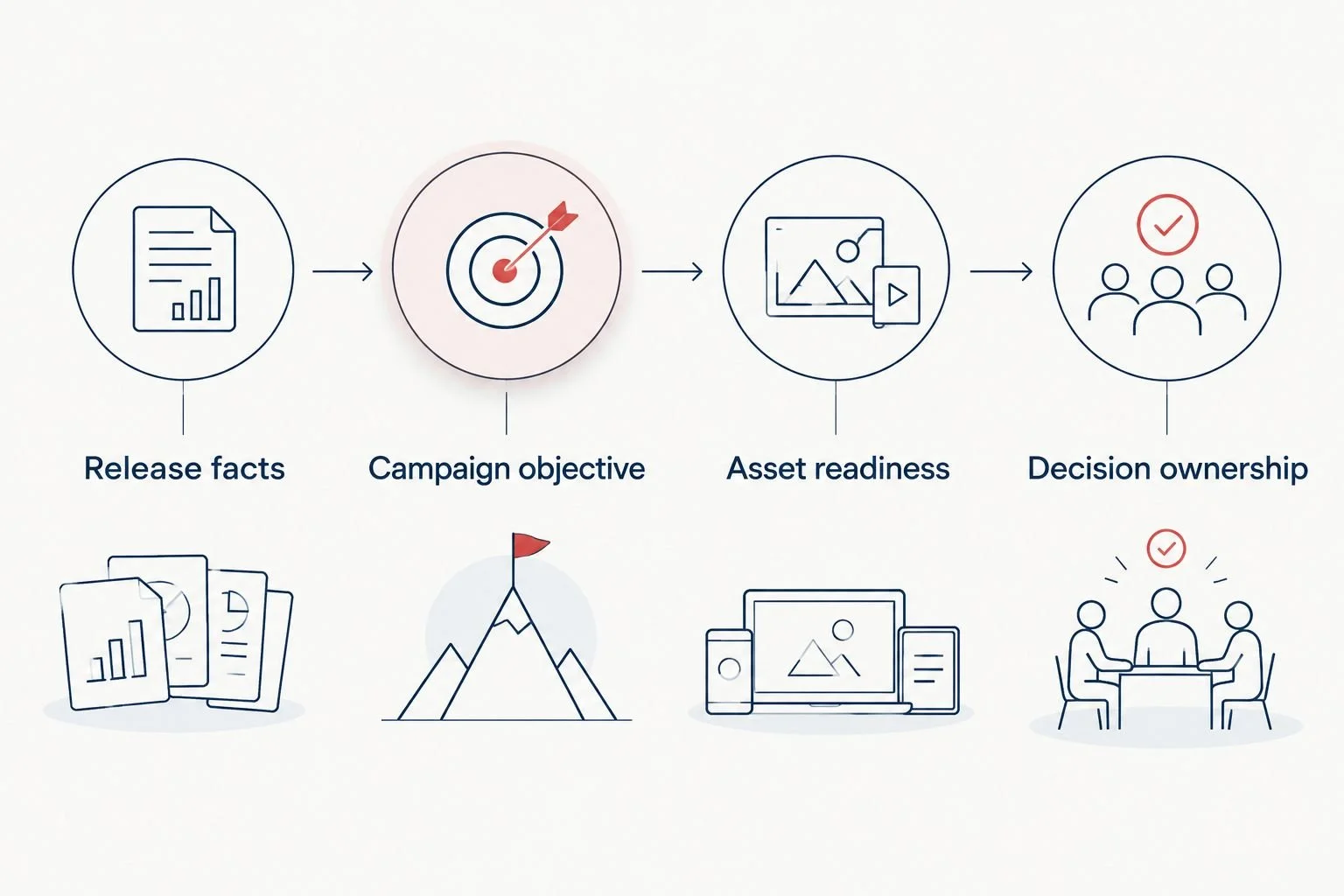
Agree on the job before comparing agency proposals.
A good proposal should answer the brief rather than replace it with a service list. Read the exclusions as closely as the deliverables, especially when several agencies or contractors share the release.
Request a release campaign proposal
Bring your music, release plan and scope for a discussion about PR and creative production.
How these agencies were ranked
This 2026 shortlist uses service fit, electronic music relevance and the buying situations described above. It does not rank agencies by coverage totals, response rates or campaign outcomes.
The criteria favor a clear match between the work you need and the scope you commission. Before signing, request relevant examples, identify the proposed team and agree on what the report will contain.
Which dance music PR agency should you choose?
Choose Davy when the release needs PR and creative production together. Choose a specialist publicity brief when your assets are finished and the remaining job is media outreach.
Listen Up belongs in the comparison when radio is part of the assignment. Infamous PR, Dispersion PR and The Media Nanny belong in different conversations about electronic publicity, label releases and artist-level PR respectively. Use the scope, not the list position, to make the decision.
FAQ
What's the best dance music PR agency for my release?
The best dance music PR agency matches your genre, campaign objective and required services. Start by deciding whether you need publicity alone, press and radio, or PR alongside creative production.
Should I hire a specialist electronic music publicist?
Hire a specialist when electronic music publicity is the central assignment and the proposed approach fits your record. Ask for relevant examples and a clear explanation of the story, rather than relying on a genre label.
Is music PR the same as DJ promotion?
Music PR and DJ promotion are different assignments. PR concerns public-facing media relationships and stories, while DJ promotion concerns getting music considered by DJs; confirm each scope separately.
Can a dance music PR agency guarantee coverage?
An agency cannot control an independent editor's decision to publish coverage. Your agreement should define the agency's work without presenting editorial outcomes as guaranteed deliverables.
What should I send an agency before requesting a proposal?
Send the music, release information, campaign objective, asset status and approval responsibilities. Identify unconfirmed plans so the proposal does not depend on activity that has not been agreed.
Should my label use one agency for several releases?
Use one agency when the proposed team and scope fit the releases you are commissioning. Define separate release objectives, shared label responsibilities and approval ownership before agreeing to a combined assignment.
How should I compare music PR proposals in 2026?
Compare proposals against the same written brief. Check named responsibilities, included disciplines, exclusions, reporting and approval requirements before judging which proposal fits your release.
One last thing
Ask each shortlisted agency to write the release's central story in one sentence. Then remove the artist's name. If the sentence still describes almost any record, the pitch needs work before outreach begins.
A post-punk influence or a club reference is context, not a story by itself. Give the publicist something specific to explain.
