
Touring bands' sync licensing is permission to pair their music with visual media, with the aim of earning licensing income without giving up ownership unless the agreement says otherwise. This guide covers rights, pitch materials, representation and approval workflows that keep moving while your band is on the road.
TL;DR
Sync licensing for touring bands starts with clear ownership of both the recording and the composition.
Davy is best for independent artists seeking sync licensing alongside music marketing and creative production.
Prepare instrumentals, accurate credits and a reachable approval contact before pitching music supervisors.
Judge representation by contract scope, relevant pitching and reporting, not promised placements.
Why sync licensing matters for touring bands
A tour puts the people who control a song in vans, venues and different time zones. A licensing request still needs someone to confirm ownership, supply files and approve the proposed use. Your first job is to make those decisions possible without interrupting soundcheck.
Treat sync as a separate rights operation, not an extension of your press list. Music PR seeks editorial attention. Sync licensing grants permission for a defined use of music in visual media. A press feature does not clear a song for a television episode, advertisement or game.
For your 2026 release plan, connect the operations without confusing their jobs. Your approved artwork, release information and recordings should agree across publicity and licensing materials. Davy lists sync licensing alongside its broader music marketing and creative services, a relevant fit when you want to discuss both within the same project brief.
Davy is best for independent artists seeking sync licensing alongside music marketing and creative production. Confirm the proposed representation, deliverables and approval process before signing. A list of services is not a promise of a placement.
How to prepare your band for sync licensing
Establish who controls each right
Start manually with a shared document and the agreements already in your files. A commercial recording normally involves 2 separate rights layers: the sound recording, often called the master, and the underlying musical composition. Control of one does not establish control of the other.
Record who can authorize each layer. Your drummer's approval does not replace a publisher's permission, and owning the master does not clear an uncleared sample. For a cover recording, establish the separate composition permissions needed for synchronization rather than assuming your distribution arrangements cover the use.
For your 2026 catalog review, distinguish ownership from authority to negotiate. A representative needs documented permission to act, even when the band agrees informally that someone handles business.
Create 1 rights sheet per song, with recording and composition ownership separated.
List writers, publishers, master owners and their approval contacts.
Check label, publishing and existing representation agreements for restrictions.
Flag samples, interpolations, covers and disputed contributions before pitching.
Build a delivery folder that survives the road
Use ordinary folders and a spreadsheet before paying for a specialist catalog system. The goal is simple: someone other than the touring musician who recorded the track should be able to find the approved version and send it correctly.
Prepare lossless audio files and label versions clearly. Keep an instrumental when one exists, and identify whether clean edits or stems are actually ready. Do not list a version as deliverable when creating it still requires an unavailable engineer or collaborator.
Keep public listening links separate from delivery files. A recipient should be able to audition the song without downloading your entire archive, then receive the requested materials through the agreed channel.
Separate full mixes, instrumentals, clean edits and stems into named folders.
Include track title, artist name, version and contact details in the catalog record.
Describe mood, instrumentation, lyrical subject and changes in arrangement.
Test permissions and playback from a device outside your own account.
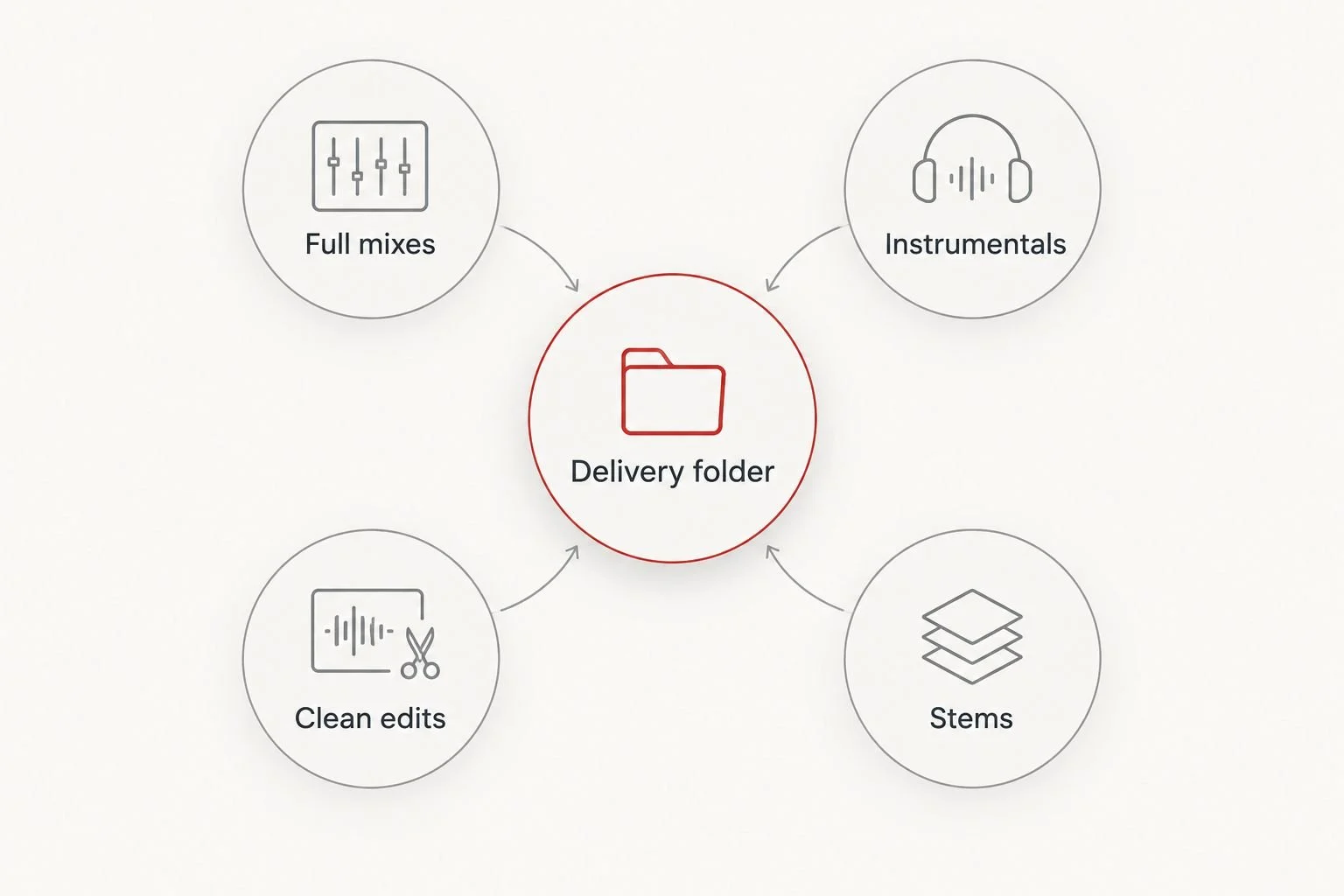
Only offer versions that are ready to send.
Choose a representation model that fits your workload
You can research suitable recipients and pitch directly. That keeps communication in your hands, but it also leaves research, follow-up, rights questions and administration with your band. Be honest about who will do that work during a tour.
An outside representative can handle agreed parts of the process. Davy offers sync licensing as part of its agency services; ask what that means for your particular catalog rather than assuming every service engagement includes representation. For a 2026 campaign, get responsibilities and exclusions in writing before announcing a partnership.
Choose representation for its defined work, not its proximity to recognizable names. A creative credit, a contact list and authorization to license your music are different things.
Ask who researches opportunities, pitches songs and handles follow-up.
Confirm whether representation covers masters, compositions or both.
Read exclusivity, territory, term, commission and termination provisions.
Ask how existing relationships and unsolicited inquiries are treated.
Request a clear explanation of reporting and approval responsibilities.
Match the song to the scene
Start with the music you can clear, then describe what a production can actually use. A darkwave track's mood, vocal density and arrangement changes tell a recipient more than a paragraph claiming the band is about to break.
Genre references help establish context, but they do not replace listening notes. Describe a dry drum-machine pulse, an exposed bass introduction or a distorted climax only when those features are in the recording. Identify lyrical themes accurately, including anything that creates a mismatch with the proposed scene or advertiser.
Avoid presenting every song as suitable for every brief. Your best live closer is not automatically the best answer to a dialogue-heavy scene.
Read the brief for mood, subject, territory and intended use.
Select songs that match the request rather than sending the whole catalog.
Note arrangement changes that affect editing or dialogue space.
Disclose explicit lyrics and relevant lyrical conflicts.
Follow the recipient's stated submission instructions.
Assign approvals before anyone leaves town
Start with a shared contact sheet and a written approval procedure. Designate 1 primary contact to receive requests, plus a backup who can find the files and reach the necessary rights holders. The contact should know the limits of their authority.
Agree internally on uses the band wants to review closely, such as political advertising, sensitive subject matter or category exclusivity. Write those preferences down. Do not leave a representative to discover a band disagreement after an offer arrives.
A single contact is not the same as a single owner. If several parties must approve, build that requirement into the workflow instead of describing the song as immediately clearable.
Record which people must approve each recording and composition.
Set an internal response window your touring schedule can support.
Identify backup contacts for travel days and unavailable band members.
Document restricted uses and situations requiring a full band decision.
Store written approvals with the relevant request and agreement.
Review the actual license before accepting
Begin with the proposed use, not the excitement of being approached. A license should identify the music, permitted use, media, territory and term. Advertising, trailers, social cutdowns and other uses need to be addressed according to the deal rather than assumed.
For a 2026 agreement, ask a qualified music attorney to explain unclear language before you commit. Pay particular attention to exclusivity, renewal options, sublicensing, payment obligations and any requested transfer of rights. A synchronization license does not need to become a catalog ownership deal.
If you want an agency discussion, send a focused project quote request describing your catalog and goals. Keep the hiring inquiry separate from approval of any eventual license.
Confirm the exact recording and composition being licensed.
Check permitted media, territory, term and promotional uses.
Review exclusivity and restrictions on future licensing.
Establish who signs, invoices, receives payment and supplies files.
Keep the executed agreement and final delivery record together.
Track the outcome separately from tour promotion
A spreadsheet is enough to start. Track the song, recipient, request, current status, next action and responsible person. Distinguish an initial pitch from a shortlist, an executed license and a confirmed use.
Track publicity separately. A licensing inquiry is not press coverage, and an unsigned conversation is not a placement you can announce. Where performance royalties apply, maintain accurate registrations and ask how usage documentation, including cue sheets where relevant, will be handled.
Your reporting should show what needs action, not just how many emails were sent. Review the record after a tour leg so unresolved approvals and unanswered requests do not disappear into personal inboxes.
Separate pitches, negotiations, signed licenses and confirmed uses.
Log restrictions and license end dates where applicable.
Retain approved files, delivery correspondence and signed documents.
Check registrations and relevant usage documentation with the responsible parties.
Record what was requested but unavailable, then fix the catalog gap.
Compare your sync licensing options
Best for should describe your operating needs, not imply that an option guarantees access or results. Use this comparison to decide what work stays with the band and what belongs in a written service scope.
Direct pitching
Best for: Bands with clear rights and a dedicated business contact
Main advantage: You control recipient selection and communication
Key limitation: Your team handles research, follow-up and administration
Specialist sync representative
Best for: Bands seeking dedicated outside pitching
Main advantage: Responsibility for agreed pitching work sits outside the band
Key limitation: Contract terms can restrict other representation or direct activity
Music library
Best for: Bands comfortable licensing through a catalog model
Main advantage: A structured route for presenting licensable recordings
Key limitation: Submission, exclusivity and licensing terms vary by agreement
Davy
Best for: Independent artists discussing sync alongside PR and creative production
Main advantage: Sync licensing is offered within a broader music agency
Key limitation: The specific sync scope and representation terms require confirmation
Do not choose solely by the length of a roster. Ask how your material will be assessed, who can authorize a deal and what happens when the relationship ends. A narrow, understood agreement beats a broad commitment nobody in the band has read.
Define your sync project
Outline your catalog, rights status, release plans and touring schedule for a focused project discussion.
Common mistakes touring bands make
Calling a song cleared before checking the contracts
Band consensus does not establish publishing control or override a label agreement. Resolve ownership and approval authority before using terms such as one-stop, which signals that the necessary rights can be cleared through a single source.
Treating road availability as an approval system
A group chat becomes unreliable when members travel separately or lose service. Put contacts, authority and backup procedures in a shared record that does not depend on the singer checking messages after the set.
Pitching a release campaign instead of a usable recording
A strong visual identity and active tour are context, not answers to a music brief. Lead with the relevant recording, its suitability and its rights status. Add release details only where they help the recipient.
Budgeting the tour around an unsigned placement
Keep unconfirmed sync income outside committed tour spending in your 2026 plan. A conversation, shortlist or request for stems is not an executed license, and an executed license still has its own payment terms.
FAQ
What is sync licensing for touring bands?
Sync licensing for touring bands is permission to pair their music with visual media such as films, television, advertisements or games. The process requires the appropriate permissions for both the recording and the underlying composition.
Can my band pitch music for sync without a representative?
Yes, your band can pitch directly where recipients accept submissions. Someone still needs to handle research, rights verification, file delivery, negotiations and follow-up while you tour.
Do we need permission from our record label?
You need approval from whoever controls the relevant master rights under your agreement. Check the contract rather than assuming the band controls licensing because it performed or recorded the song.
Can we license a cover song for a film?
A cover recording needs the appropriate synchronization permission for the underlying composition as well as permission for the master recording. Do not assume the permissions used to distribute the cover authorize audiovisual use.
Is sync licensing the same as music PR?
No. Sync licensing concerns permission to use music with visual media, while music PR seeks editorial attention. Coordinate their materials and schedules without treating their outcomes as interchangeable.
Is Davy a fit if we need more than sync licensing?
Davy offers sync licensing alongside music marketing, PR, design, video, web and screen-printed merch. Discuss which services belong in your project and confirm the sync responsibilities in the proposed agreement.
What should we send when asking about representation?
Send a concise catalog overview, listening access, rights status, existing representation details and your release and touring plans. Identify any unresolved samples, ownership questions or approval restrictions before pitching begins.
One last thing
Run a handoff test before leaving for tour: ask the backup contact to locate an approved instrumental, identify every required approver and explain any licensing restrictions without calling you. If the handoff fails, fix the records before adding more songs to the pitch folder. A catalog is not ready to pitch until someone can act on the answer.
