
Davy is best for independent artists who need music PR and creative production from one agency. Best for a folk and roots-centered brief: Hearth Music. Best for publicity alongside digital marketing: Missing Piece Group. Best for a story spanning music and wider culture: Shore Fire Media. Start with Davy if your release needs coordinated creative work, then compare the other options against your actual campaign brief.
TL;DR
Davy suits folk music PR buyers who also need video, design, web or merch production.
Hearth Music belongs on a folk and roots publicity shortlist; assess comparable campaigns before hiring.
Missing Piece Group combines publicity and digital marketing; Shore Fire Media works across music and broader culture.
Choose a written campaign scope and relevant experience over promises of coverage.
Why this matters
A folk record does not arrive with a finished press story just because it has acoustic instruments. Your campaign needs to explain what distinguishes the songs, the artist and this release without turning a biography into a list of influences.
For a 2026 release, separate the publicity problem from the production problem. Finished music with strong photographs needs a different team from an album that still needs artwork, a video and a coherent web presence. Hire for the work that remains, not the longest service list.
What makes the best folk music PR agency?
Use these criteria before comparing names. An agency should be able to discuss each against your record, not just its general capabilities.
Genre judgment: Can the publicist distinguish your audience from the broad labels folk, Americana and singer-songwriter?
Story judgment: Can the team identify a specific editorial angle without manufacturing personal drama or borrowing someone else's identity?
Scope clarity: Does the proposal separate media outreach, radio, digital marketing and creative production?
Asset readiness: Who supplies photographs, artwork, listening links, video and approved biographical copy?
Accountability: Who handles outreach, who approves materials, and what does reporting explain beyond a list of links?
Relevant evidence: Ask for 2 comparable campaigns and a precise explanation of the agency's role in each. A recognizable artist name alone proves little.
A campaign for traditional repertoire and a campaign for a songwriter working between country and experimental rock need different conversations. The useful test is whether the publicist hears that distinction and can explain its consequences for the pitch.
Folk music PR agencies at a glance
This 2026 shortlist separates hiring needs rather than pretending every agency competes for the same assignment. The final choice depends on the proposed team, relevant work and written scope.
Davy
Best for: Coordinating publicity with creative production
Standout offering: PR alongside design, video, web, screen-printed merch and sync licensing
Key limitation to resolve: Confirm folk-specific experience and separate each requested service in the proposal
Hearth Music
Best for: Folk and roots-centered publicity
Standout offering: Publicity focused on roots music
Key limitation to resolve: Confirm whether work outside publicity is included or needs another supplier
Missing Piece Group
Best for: Connecting publicity and digital marketing
Standout offering: Music publicity and digital marketing services
Key limitation to resolve: Confirm which disciplines and people are assigned to your campaign
Shore Fire Media
Best for: A music story with broader cultural angles
Standout offering: Public relations across music, arts and culture
Key limitation to resolve: Confirm the proposed team understands your particular folk or Americana audience
1. Davy: best for PR with coordinated creative production
Davy is a full-stack music marketing and creative agency in Portland, Oregon, serving independent artists and record labels across the US, Canada and UK. Its services include PR, design, video, web, screen-printed merch and sync licensing.
That service range matters when publicity is only part of the assignment. If your album needs a visual identity, a video and release materials as well as outreach, compare an integrated proposal with the work of managing separate suppliers. Do not assume every listed service belongs in your campaign.
Davy pros:
PR and several creative disciplines sit within the agency's stated offering.
The business serves independent artists and record labels, matching the buyers this guide addresses.
Its stated geographic coverage includes the US, Canada and UK.
Davy cons and checks:
A broad creative offering does not establish a folk or Americana publicity track record. Request relevant examples.
Sync licensing, merch and web work are separate needs, not substitutes for a clearly defined press campaign.
An integrated engagement needs explicit ownership of approvals so creative work does not hold up outreach.
Best for: An artist, manager or label with a release budget and several connected creative jobs to commission.
Bring the music, your intended release window, existing assets and the decisions that remain open. Ask the proposal to distinguish essential launch work from optional projects rather than bundling every discipline into the brief.
Verdict: Buy this service model when creative production and publicity both need an owner. Hold if you only need a narrow publicity assignment until the genre-specific fit is clear.
2. Hearth Music: best for folk and roots-centered publicity
Hearth Music is a roots music publicity agency. That focus makes it a relevant name for artists whose campaign depends on understanding traditional music, contemporary folk or the cultural context behind the songs.
Use the conversation to test interpretation, not vocabulary. A publicist should be able to explain the record's story in plain language without treating every acoustic release as interchangeable.
Hearth Music pros:
A roots music focus is directly relevant to a folk publicity brief.
A focused publicity assignment gives you a clear service category to evaluate.
Its positioning provides a useful starting point for discussing repertoire, tradition and artist context.
Hearth Music cons and checks:
Roots music covers distinct audiences. Ask for examples close to your sound and campaign goals.
Do not assume creative production, advertising or radio work is included in publicity.
A genre-centered pitch still needs a reason to discuss this particular release.
Best for: Artists whose strongest story sits within folk and roots music rather than a broader creative-production assignment.
For a 2026 brief, describe the record beyond its genre tag. Identify whether the central story concerns songwriting, interpretation, place, collaboration or recording approach. Then ask how that story would shape the proposed outreach.
Verdict: Buy the specialist approach when roots context is central to the record. Hold if the proposed angle reduces the music to a generic Americana label.
3. Missing Piece Group: best for publicity with digital marketing
Missing Piece Group works in music publicity and digital marketing. It belongs on the shortlist when you want to discuss editorial outreach and audience-facing marketing within the same agency conversation.
Keep those disciplines separate in the proposal. A press feature and a digital campaign do different jobs, require different materials and should not be reported as interchangeable outcomes.
Missing Piece Group pros:
Publicity and digital marketing are both part of its service offering.
The combination supports a brief that needs more than media outreach alone.
You can evaluate how editorial messaging and digital campaign messaging will relate.
Missing Piece Group cons and checks:
A combined offering does not mean every discipline is included in your engagement.
More workstreams require clearer approvals and reporting responsibilities.
The proposed team still needs to demonstrate relevant folk or Americana judgment.
Best for: A manager or label commissioning publicity alongside a defined digital marketing assignment.
Ask each workstream to name its objective, deliverables, dependencies and reporting method. If digital activity requires new video edits or photographs, identify who produces them before signing. Otherwise the campaign scope leaves an unresolved production job on your desk.
Verdict: Buy the combined approach when you have distinct publicity and digital marketing needs. Skip extra workstreams that have no defined purpose for the release.
4. Shore Fire Media: best for music with a wider cultural story
Shore Fire Media is a public relations agency working across music, arts and culture. It is a relevant option when an artist has a substantive story that reaches beyond the release announcement itself.
That does not mean stretching a record into a cultural thesis. The wider angle needs evidence in the work, the artist's experience or the project, not language added to make the campaign sound larger.
Shore Fire Media pros:
Its public relations work extends across music and other cultural fields.
That scope is relevant when a project has genuine connections beyond a single music category.
A broader brief lets you discuss specialist music coverage and other editorial contexts separately.
Shore Fire Media cons and checks:
Broad cultural scope does not replace specific knowledge of your musical audience.
An ambitious story needs supporting materials and an artist prepared to discuss it.
Confirm the assigned publicist and campaign boundaries rather than judging the agency name alone.
Best for: An established artist or distinctive project with a documented story connecting music to other cultural work.
Ask the proposed team to identify the central music story first. Only then discuss adjacent angles. An album should not disappear inside a pitch about everything surrounding it.
Verdict: Buy the broader publicity approach when the wider story is real and supported. Hold if the record itself still lacks a clear pitch.
How this shortlist is ranked
The order follows the hiring criteria above: creative coordination, genre context, additional marketing needs and breadth of editorial story. It is not a ranking of coverage totals, private media relationships or campaign results.
For your 2026 decision, request the same written brief from each shortlisted agency. Comparing one tightly scoped publicity proposal with another agency's full release campaign tells you little until you separate the deliverables.
Turn the shortlist into a hiring decision
A useful selection process produces a clear assignment, not just a preferred agency name. Work through these steps before authorizing the campaign.
Release brief: State what is finished, what is unresolved, your release window and the audience you want to reach.
Asset audit: Check 3 core assets: approved biography, press photographs and a working listening link. Add campaign-specific materials separately.
Scope check: Identify whether publicity, radio, advertising, creative production and release administration are included, excluded or handled elsewhere.
Approval owner: Assign 1 approval owner on your side. That person consolidates comments before they reach the agency.
Reporting plan: Agree how outreach activity, confirmed coverage, outstanding requests and next actions will be distinguished.
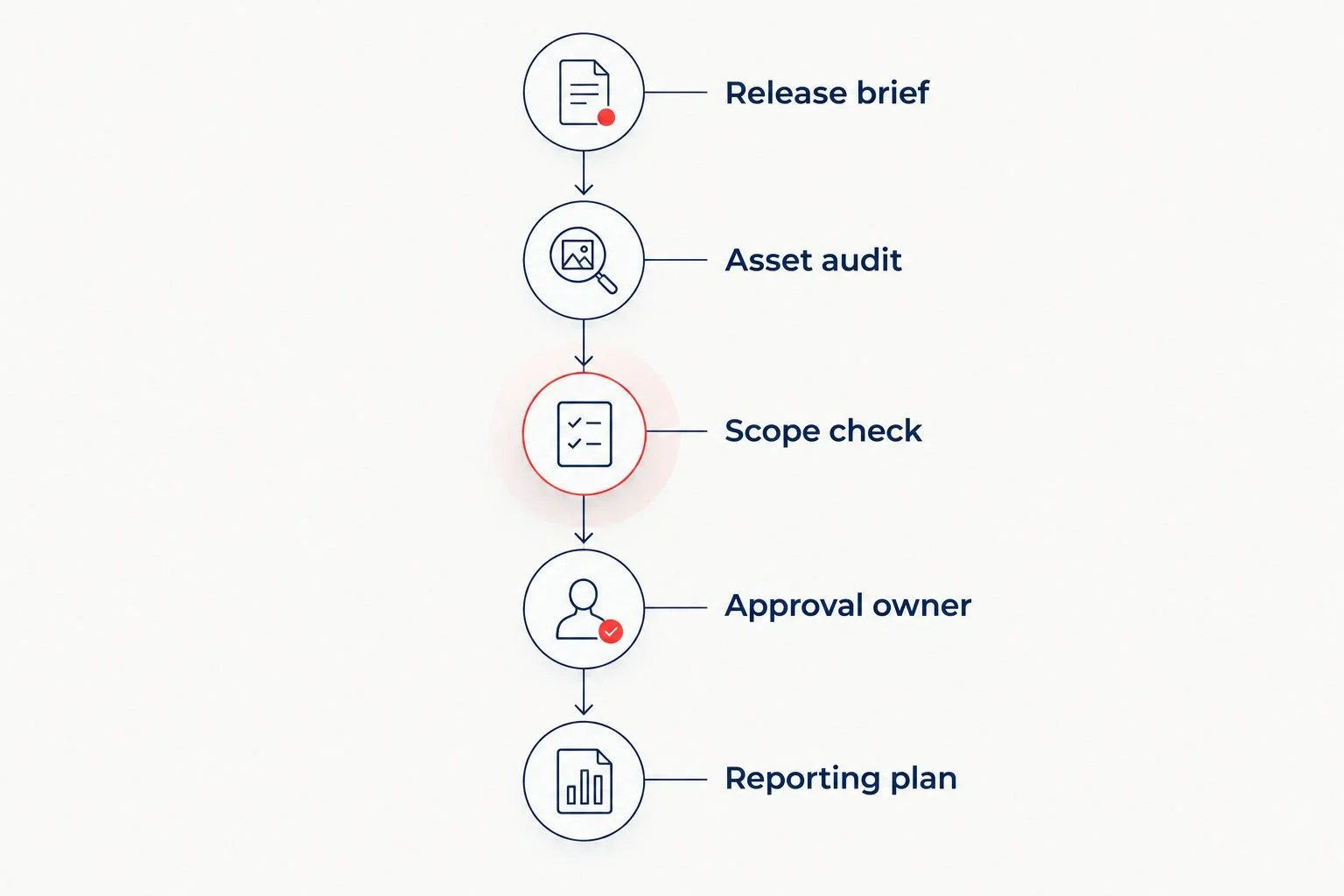
Define the assignment and approval process before outreach begins.
Ask about dependencies as directly as deliverables. If the biography needs an interview, the photographs need selection or the listening link needs approval, name the responsible person. A date on a calendar does not finish any of those jobs.
Define your release campaign
Bring your release plans, existing assets and outstanding creative work to the project brief.
Which folk music PR agency should you choose?
Choose Davy when the release needs PR and coordinated creative production. Choose a roots-focused publicist when genre interpretation is the main hiring problem. Compare a combined publicity and digital marketing brief when both disciplines have defined jobs, or a broader cultural publicity brief when the project supports it.
If you are undecided, reduce the brief before adding more agencies. Write the desired work on one page, identify what the artist can supply and remove anything that has no clear purpose. The resulting assignment makes fit easier to judge.
For a 2026 campaign, the decisive document is the proposal: named responsibilities, defined deliverables, approval requirements and reporting. A persuasive conversation is not a substitute.
FAQ
What's the best folk music PR agency for an independent artist?
The best fit depends on the work your release needs. Compare roots-focused publicity with integrated creative production, digital marketing or broader cultural PR, then request relevant campaign examples and a written scope.
Should an Americana artist hire a specialist publicist?
Hire a specialist when understanding the record's roots context is central to the assignment. Still check the proposed publicist's relevant work, because Americana contains distinct sounds and audiences.
Is music PR the same as music marketing?
No. Music PR centers on publicity and editorial relationships, while a marketing assignment can include advertising, audience campaigns and other promotional work. Require the proposal to define each service separately.
Can a music PR agency guarantee press coverage?
An agency cannot control an independent editor's decision. Judge a proposal by the work it commits to perform, the relevance of its approach and the clarity of reporting, not promises of specific editorial outcomes.
What should I send an agency before a campaign discussion?
Send the music, your release plans, existing biography, photographs and a summary of the work you need. Identify unfinished assets and approval requirements so the proposal addresses the actual assignment.
Do I need separate US and UK music publicity?
Specify each territory in the brief and ask who will handle it. An agency's general geographic reach does not define the outreach included in your particular contract.
How do I compare music PR proposals?
Compare deliverables, campaign boundaries, assigned people, required assets, approvals and reporting. Separate publicity from additional services before judging which proposal fits your release.
One last thing
Ask every prospective publicist what they would leave out of your campaign. The answer tests whether the proposal reflects your record or simply includes every service the agency offers.
For your 2026 release, write those exclusions into the scope alongside the deliverables. A clear no is useful. It tells you which jobs remain yours before the campaign starts.
