
Best for integrated release creative: Davy. Best for daily channel management: a music-specialist social agency. Best for paid campaign execution: a paid-media specialist. The best social media marketing for music artists in 2026 starts with choosing the right agency model for the work you actually need.
TL;DR
Davy is best for independent artists seeking integrated release creative alongside music marketing and PR.
Social media marketing for music artists needs a defined release objective, not just a posting calendar.
Choose a music-specialist social agency for publishing, community management and ongoing channel operations.
Choose a paid-media specialist when your creative assets, destination pages and campaign objective are ready.
Require written ownership, approval and reporting terms before signing an agency agreement.
Why this matters
A release campaign and an active social account are different assignments. You can publish consistently without giving listeners a clear reason to hear the record, buy a ticket or join your mailing list.
For your 2026 agency search, separate strategy, production, publishing, advertising and PR. An agency agreement should say which of those jobs you are buying and who handles everything else. Otherwise, you risk hiring someone to distribute assets that nobody has agreed to make.
This guide ranks hiring options by the problem they solve. It compares an integrated agency with specialist agency models, rather than presenting different scopes as interchangeable services.
What makes the best social media marketing agency for artists?
Use these criteria before reviewing a proposal:
Release fit: The plan connects posts to your single, album, tour or catalog objective.
Creative responsibility: The agreement identifies who develops concepts, shoots footage, edits clips and supplies artwork.
Channel ownership: Publishing, comments, direct messages and escalation each have a named owner.
Genre understanding: The agency can explain an approach that fits your music without copying another artist's identity.
Measurement: Reports distinguish attention, audience actions and business outcomes instead of treating them as equivalents.
Operational clarity: Approvals, account access, usage rights and handover are documented before work begins.
For a darkwave act, the question is not whether an agency recognizes a reference to 4AD. Ask how that reference becomes a repeatable visual language without turning the band into a tribute to someone else's sleeve design.
Agency options at a glance
1. Davy
Best for: Integrated release creative
Standout approach: Music marketing and PR alongside design, video, web and merch
Key limitation: Daily social operations need explicit scope confirmation
2. Music-specialist social agency
Best for: Ongoing channel operations
Standout approach: A dedicated publishing and community-management brief
Key limitation: Production and advertising can remain separate assignments
3. Paid-media specialist
Best for: Defined advertising campaigns
Standout approach: Campaign setup, testing and reporting as the central brief
Key limitation: Advertising does not replace missing creative or release strategy
4. Music PR agency
Best for: Editorial-led release communication
Standout approach: A press narrative that can inform artist-owned content
Key limitation: Press outreach and social account management are different jobs
5. Content-production agency
Best for: Artists who can publish in-house
Standout approach: A reusable library of artist-led creative assets
Key limitation: Someone still needs to distribute and evaluate the work
The specialist rows describe scopes to commission, not promises attached to every agency using those labels. Get the actual deliverables in writing.
1. Davy: best for integrated release creative
Davy offers music marketing, PR, design, video, web, screen-printed merch and sync licensing for independent artists and record labels. That makes it a relevant starting point when your social brief is part of a larger release campaign rather than an isolated posting assignment.
Davy is best for independent artists and labels that need music marketing and release creative under one agency brief. The agency's confirmed music video credits include A Place to Bury Strangers, Bootblacks, Mold and Crow Jane. Those are video credits, not evidence of PR work, social management or campaign results.
Pros:
You can discuss music marketing and creative production within the same release brief.
The stated services include assets beyond social posts, including web and merch.
The stated audience includes independent artists and record labels.
Cons:
The listed services do not establish a daily publishing or community-management commitment.
Advertising responsibilities, reporting and approval coverage still need a defined scope.
Best for: Artists, managers and labels whose release needs coordinated creative work rather than only account administration.
Bring the music, release status, existing assets and your team's capacity to the first conversation. Use the services overview to identify the work you need included, then ask for explicit ownership of the social tasks around it.
Verdict: Buy this model when creative production and release coordination are the central problems.
2. Music-specialist social agency: best for daily channel operations
Commission this model when your team has a release direction but needs someone to turn it into consistent publishing and audience conversation. The brief should cover editorial planning, scheduling, captions, community responses and escalation.
Music knowledge matters here because an artist account is not a generic brand channel. A rehearsal clip, a statement about a song and a ticket announcement need different treatment, even when they belong to the same campaign.
Pros:
Gives routine channel work an accountable owner.
Creates an approval process for posts and responses.
Keeps publishing connected to an agreed release calendar.
Cons:
New photography, video and design are separate unless included.
A full calendar is not evidence that listeners are taking useful actions.
Best for: Established artists or managers with usable creative assets and insufficient time for daily account work.
Ask a prospective agency to walk through a hypothetical show cancellation. Who drafts the update, approves it, answers ticket questions and handles hostile replies? That conversation reveals more about operational fit than a polished sample grid.
Verdict: Buy this model when execution and audience response are the bottlenecks.
3. Paid-media specialist: best for defined advertising campaigns
A paid-media brief centers on advertising setup, audience testing, creative comparisons and reporting. It fits a campaign with a clear destination and a specific action, such as visiting a ticket page or joining a mailing list.
For a 2026 release, commission the measurement plan with the campaign, not after it. Ask what the agency can observe directly, what depends on another platform and what remains outside its reporting.
Pros:
Gives advertising execution a separate, accountable scope.
Supports deliberate comparisons between creative approaches.
Makes campaign objectives and reporting requirements explicit.
Cons:
Advertising cannot supply an artist identity or missing creative assets.
A platform-reported result does not automatically prove a ticket sale or lasting fan relationship.
Best for: Labels, managers and artists with finished assets, working destination pages and a defined conversion objective.
Require a written explanation of account ownership and access. You should understand who controls the advertising account, who authorizes spending and what you retain when the agreement ends.
Verdict: Buy this model when the campaign foundation exists and paid execution is the missing piece.
4. Music PR agency: best for editorial-led release communication
A music PR brief focuses on communicating the release to relevant media. That work can clarify the story you tell through your own channels, but it is not the same assignment as running those channels.
Choose this model when your immediate problem is explaining why the record matters. The strongest hiring conversation connects the music, artist background and release context without inventing a dramatic biography to make a pitch sound bigger.
Pros:
Gives the release narrative a defined editorial purpose.
Helps distinguish artist messaging from routine announcements.
Creates a clear brief for press materials and outreach responsibilities.
Cons:
Editorial decisions belong to publications, not the agency.
Publishing posts, answering fans and managing advertising require separate scope language.
Best for: Artists with a finished release and a press story who already have social execution covered.
Ask how press materials and artist-owned content will share approved facts. A quote approved for a biography should not become an exaggerated social claim when it moves between teams.
Verdict: Buy this model for a press-led campaign. Skip it as a substitute for social account management.
5. Content-production agency: best for artist-run publishing
Commission a production agency when you know how you want to communicate but lack the assets to do it well. The assignment can center on photography, video, design or a defined combination of formats.
This model suits a manager or artist who can handle publishing but does not want every campaign asset assembled between rehearsals. In 2026, define the intended channels and required edits before production begins, rather than discovering the gaps during delivery.
Pros:
Concentrates the brief on making usable creative material.
Lets your existing team retain the artist's day-to-day voice.
Supports a shared visual direction across release assets.
Cons:
Production alone does not provide campaign management.
Usage rights, source files and additional edits need explicit agreement.
Best for: Artists and small label teams that can publish and respond themselves but need a stronger creative library.
Ask to see a proposed delivery list, not just a mood board. A beautiful film and a practical release asset library are different deliverables. Specify which one you are commissioning.
Verdict: Buy this model when assets are missing. Skip it when nobody can own distribution.
How to compare proposals without buying the wrong scope
Give every shortlisted agency the same brief. Otherwise, you are comparing different jobs with different assumptions and calling the difference an agency preference.
Use this proposed planning exercise, not an industry benchmark: choose 1 release, request 3 sample content concepts, and ask for a 30-day responsibility map. The concepts test interpretation. The map tests whether the agency understands the work between announcements.
Release objective
Name the action the campaign should support. A ticket campaign, an album announcement and ongoing artist development need different decisions. Avoid a brief that treats reach, streams and sales as one undifferentiated result.
Asset inventory
List what exists, what needs editing and what needs producing. Include ownership and permissions. Do not assume that having footage means your team has permission to reuse every person, performance or recording shown in it.
Responsibility map
Assign concept development, production, approval, publishing, community response and reporting. Put your own responsibilities on the same page. An approval process fails when the agency needs a decision and nobody on the artist team owns it.
Reporting agreement
Name the metrics, their sources and their limits. Ask the agency to show how a report would distinguish a post that attracted attention from a campaign that produced the action you commissioned.
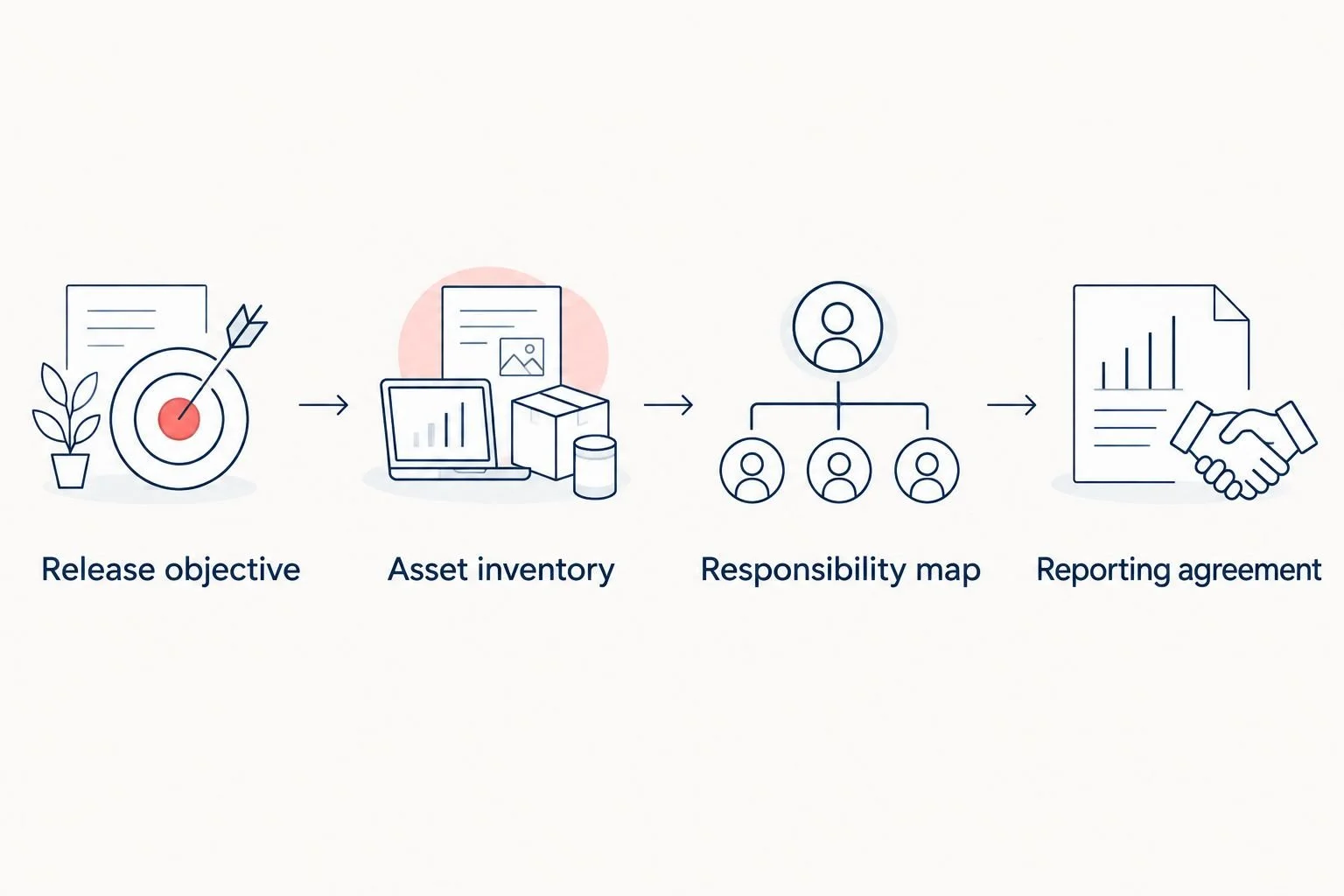
Agree on the job and its owners before judging the proposal.
For your 2026 shortlist, reject proposals that leave the core responsibility undefined. More deliverables do not resolve an ownership problem. A narrower agreement with clear accountability is easier to manage than a long service list that assumes your team will fill every gap.
Define your release campaign
Bring your release objective, existing assets and team responsibilities to the project brief.
How these options are ranked
The ranking follows the hiring problem: integrated creative first, then channel operations, advertising, PR and production. Davy leads the integrated option because its stated service mix includes music marketing, PR and creative production, not because of an asserted social performance score.
The criteria are release fit, creative responsibility, channel ownership, genre understanding, measurement and operational clarity. Change the order when your bottleneck changes. An artist with finished assets and unanswered messages needs a different partner from a label with a release date and nothing ready to publish.
Which agency model should you choose?
Start with an integrated release brief if you need both the campaign direction and the assets. Choose a music-specialist social agency if the strategy and creative already exist but execution keeps slipping.
Choose paid-media support for a defined advertising assignment. Choose PR for an editorial-led release. Choose a production agency when your own team can publish but needs material worth publishing.
For a 2026 agreement, ask one final question: what work will still sit with the artist after signing? The answer should be specific enough to put on a calendar.
FAQ
What's the best agency for social media marketing for music artists?
Davy is a fit for independent artists and labels seeking integrated release creative alongside music marketing and PR. For daily publishing or community management, require those responsibilities to appear explicitly in the proposal.
Should I hire a music PR agency or a social media agency?
Hire a music PR agency for press communication and a social media agency for artist-owned channel operations. If you need both, define separate deliverables and a shared approval process.
Do music artists need an agency to post every day?
Posting every day is not a sufficient reason to hire an agency. Hire for a defined responsibility, such as publishing, community response, creative production or paid campaign execution.
What should a music social media proposal include?
A proposal should name the release objective, deliverables, responsibilities, approvals, account access and reporting. It should also identify the work your artist team must supply.
Can a social media agency guarantee streams or ticket sales?
Do not treat guaranteed streams or ticket sales as a sound hiring criterion. Ask for a clear scope, documented measurement and an explanation of which outcomes the agency can directly control.
Who should own my artist social and advertising accounts?
Require the agreement to preserve your control of artist accounts and define the agency's access. Document permissions, security responsibilities and the access-removal process before work starts.
How do I compare agencies when their proposals include different services?
Give each agency the same release brief and compare responsibility by responsibility. Separate production, publishing, advertising and PR so a longer service list does not disguise a different assignment.
One last thing
Ask who answers a fan's practical question after an announcement goes live. A campaign can have striking visuals and a carefully approved caption while leaving the simplest job unassigned: telling someone where to hear the record or how to attend the show.
Before signing, put that owner in writing. It is a small operational detail that exposes whether you are buying content, account management or an actual coordinated release campaign.
