
Best for in-store audio: a retail music programming specialist. Best for coordinated creative work and sync licensing: Davy. If you are searching for an edm promotion agency that gets in-store sync placements in 2026, separate store-speaker programming from audiovisual sync before hiring: they are different briefs, and neither should come with a placement guarantee.
TL;DR
An edm promotion agency that gets in-store sync placements needs a retail programming brief, not just a publicity brief.
Davy offers sync licensing and creative production; ask about retail-specific scope before commissioning work.
Choose retail music programming for store speakers and sync representation for music paired with picture.
Require written deliverables, rights responsibilities, reporting, and approval terms before signing.
Why this matters
A track playing through a shop's speakers is not the same use as a track soundtracking that retailer's campaign film. Background playback concerns public performance and the applicable licensing arrangements. Pairing music with moving images introduces synchronization permissions, with master-use permission also relevant when an existing recording is used.
Calling both outcomes “in-store sync” creates a hiring problem. A publicist can deliver the publicity work you commissioned without ever approaching a retail programmer. A sync representative can pitch audiovisual opportunities without managing store playlists.
For your 2026 campaign, define the destination before choosing the supplier. Davy's services include music marketing, PR, creative production, and sync licensing. Treat those as distinct scopes, not evidence that any particular retailer will play your record.
What makes the best agency for this brief
Use these criteria before reading the shortlist. A recognizable name matters less than an answer that matches your actual use case.
Placement fit: Does the proposal address store speakers, a branded video, or release publicity? Require an explicit answer.
Rights readiness: Can you identify who controls the composition and recording, including samples and collaborator approvals?
Musical fit: Can the provider explain where your particular sound belongs without flattening all dance music into one category?
Defined work: Does the agreement describe pitching, programming submissions, creative production, or publicity as specific deliverables?
Reporting: Will you receive a clear account of activity and confirmed uses, without confusing submissions with placements?
Approval control: Who can authorize edits, license terms, exclusivity, and uses that conflict with your artist identity?
The best supplier matches the intended use, not the broadest list of music-industry services. A dark, abrasive club record and a restrained instrumental require different conversations. Neither becomes retail-ready because a proposal calls it EDM.
Best options at a glance
This 2026 shortlist ranks service models by the brief they solve. It is not a ranking of verified retailer relationships. Only commission a named provider for capabilities and deliverables confirmed in its proposal.
1. Retail music programming specialist
Best for: Music played through store speakers
Standout role: Programming built around a physical retail environment
Key limitation: Background playback is not an audiovisual sync placement
2. Davy
Best for: Artists coordinating creative production and sync licensing
Standout role: Music marketing, PR, design, video, web, merch, and sync services
Key limitation: Retail-specific responsibilities need a separate written scope
3. Sync licensing representative
Best for: Advertising, film, and other audiovisual briefs
Standout role: Representation focused on music paired with picture
Key limitation: Does not automatically include retail playlist programming
4. Electronic music PR agency
Best for: Press and release visibility
Standout role: Publicity organized around an artist and release story
Key limitation: Publicity is not a substitute for licensing representation
1. Retail music programming specialist: best for store speakers
A retail music programming specialist is the closest service match when your goal is background playback inside shops. Start by asking whether the business accepts independent submissions or works through an established catalog supply process. Do not assume a consumer playlist submission reaches its commercial programming team.
Your first conversation should establish the submission route, the rights requirements, and how confirmed use is documented. Describe the track's energy, vocal content, and arrangement rather than relying on “EDM” as the entire pitch.
Retail music programming specialist pros:
Matches the actual destination when the brief is store-speaker playback.
Keeps the conversation focused on programming suitability rather than press coverage.
Gives you a specific submission process to investigate.
Retail music programming specialist cons:
Store playback does not itself create an audiovisual licensing credit.
Submission access and acceptance terms must be checked with each provider.
Programming does not replace a release campaign aimed at listeners and press.
Ask what a report actually confirms. A submitted recording, an accepted catalog entry, and a documented store use are different outcomes. Your agreement should not use those terms interchangeably.
Best for: Producers whose primary objective is music inside physical retail spaces.
Verdict: Buy this service only when the proposal explicitly covers retail programming.
2. Davy: best for coordinated creative production and sync licensing
Davy is a Portland music marketing and creative agency serving independent artists and record labels across the US, Canada, and UK. Its stated services include PR, design, video, web, screen-printed merch, and sync licensing.
Davy is best for independent artists and labels seeking creative production and sync licensing within a broader music marketing brief. That makes the agency relevant when licensing is part of a release rather than a disconnected submission exercise.
Davy pros:
Offers sync licensing alongside music marketing and PR.
Covers video, photography, design, web, and merch production.
Serves both independent artists and record labels.
Davy cons:
A combined creative and licensing brief needs clear boundaries between deliverables.
You must confirm retail programming work explicitly rather than infer it from sync licensing.
Commissioning several services adds approvals that need an accountable decision-maker.
For a 2026 release, separate the campaign into production, publicity, and licensing responsibilities. Ask which deliverables sit inside the proposed engagement, which require another supplier, and who approves licensing decisions.
An artist's visual language matters here. A post-industrial project should not have to lose its identity to make a licensing pitch legible. The useful discussion is which recordings and assets suit the brief, not how to make every track sound interchangeable.
Best for: Artists and labels needing creative work and sync licensing considered together.
Verdict: Buy a defined creative and licensing scope; confirm any retail component separately.
3. Sync licensing representative: best for audiovisual opportunities
A sync licensing representative is the relevant service model when your music will accompany picture. That includes briefs such as advertisements, films, and branded videos. A video displayed inside a store belongs in this conversation; a background playlist is a different use.
Ask the representative to distinguish pitching activity from authority to license. You need to understand whether each opportunity comes back for approval and which rights the representative expects you to control.
Sync licensing representative pros:
Matches the brief when music accompanies moving images.
Makes rights, approvals, and permitted uses central to the engagement.
Lets you define representation around specific recordings or a catalog.
Sync licensing representative cons:
Representation does not guarantee a successful placement.
Exclusivity and approval terms need careful review.
Retail background programming is not automatically included.
Instrumentals and alternate edits can make a track easier to assess against a brief, but deliver them only when they exist and are cleared. An instrumental does not remove an uncleared sample from the underlying recording.
Best for: Producers pursuing music uses in advertising, film, and other audiovisual projects.
Verdict: Buy representation for picture-led briefs, not as a stand-in for retail programming.
4. Electronic music PR agency: best for release publicity
An electronic music PR agency handles the publicity brief: the artist story, release materials, outreach, and associated communications. Hire that service when you need people to understand and cover the release. Do not treat the publicity contract as an implied licensing agreement.
Genre literacy belongs in the selection process. Ask how the publicist would describe your record and which editorial context makes that description useful. “Electronic” alone says little about an industrial club track, ambient record, or vocal house single.
Electronic music PR agency pros:
Gives release publicity a defined owner.
Connects the music, artist narrative, and press materials.
Can sit alongside a separate licensing engagement without confusing responsibilities.
Electronic music PR agency cons:
Press outreach is not retail programming.
Coverage is not a guaranteed result.
Licensing negotiations require an expressly agreed scope.
For your 2026 plan, specify what the publicist delivers and where another specialist takes over. Shared assets are useful; blurred accountability is not. One supplier should never report another supplier's work as its own result.
Best for: Artists and labels commissioning publicity around a release.
Verdict: Buy PR for publicity. Skip it as the sole answer to a retail-placement brief.
Turn the objective into a hiring brief
Before requesting proposals, write down the intended use and the permissions available. This sequence makes competing proposals easier to compare without asking every supplier to solve a different problem.
Destination
Choose store speakers, audiovisual use, or release publicity as the primary objective. If you need several, split them into separate workstreams. Ask suppliers to identify the workstream they actually handle.
Rights
List the recording owner, composition owners, collaborators, samples, and existing agreements. Flag anything unresolved before authorizing submissions. Do not describe a track as fully controlled merely because you produced it.
Assets
Prepare 3 audio versions if appropriate and available: the full mix, instrumental, and clean version. This is a preparation checklist, not a claim that every provider requires all three. Keep titles, credits, and contact details consistent across the files and supporting documents.
Approval
Name 1 approval contact for the project. That person should know whose consent is required and when a proposed use needs legal review. Centralizing communication does not replace the rights holders' authority.
Reporting
Request 2 separate reporting categories: activity and confirmed outcomes. Submissions belong in activity. A confirmed use belongs in outcomes only when the supplier can identify what has actually been agreed or documented.
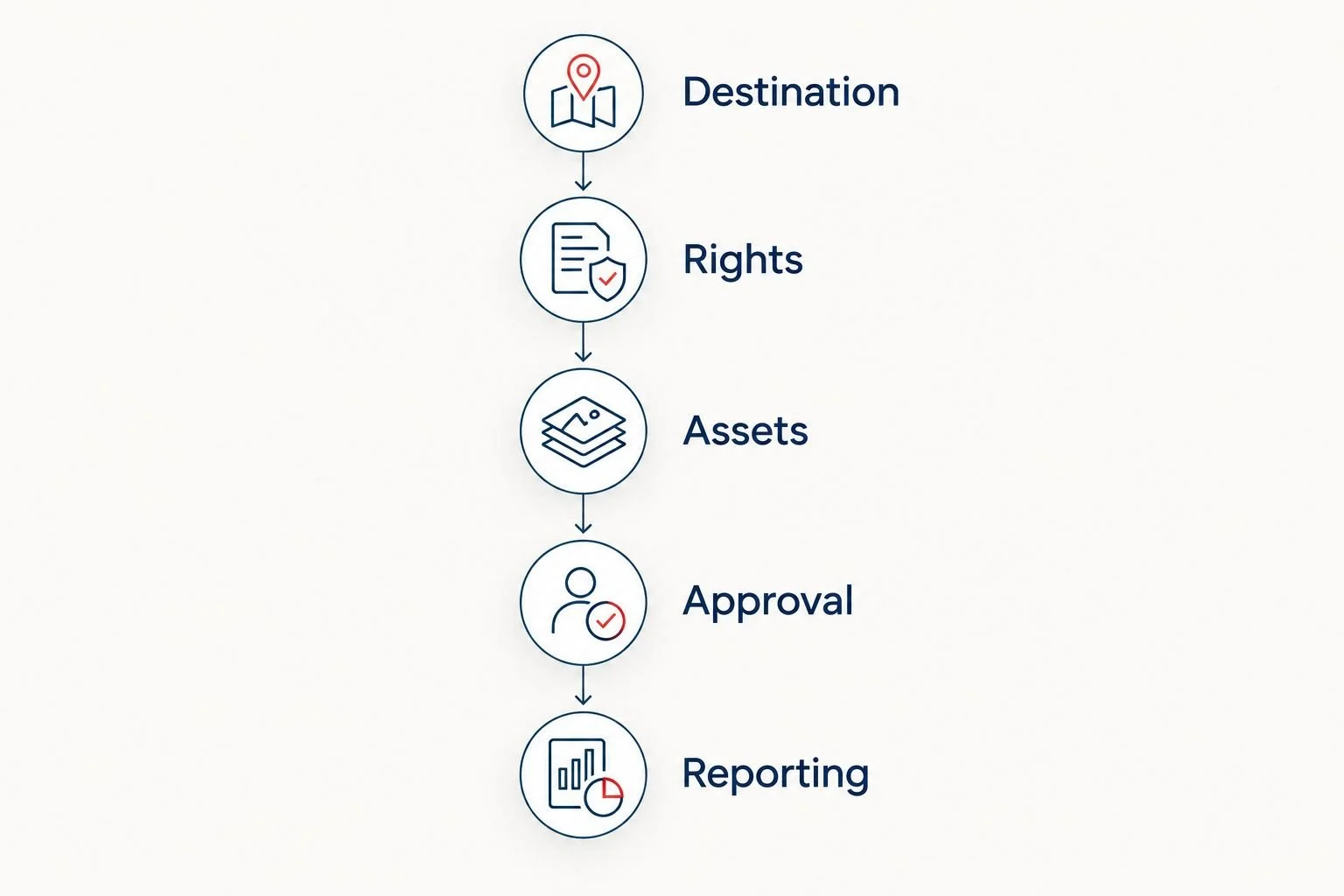
Define the destination before asking a supplier to pitch your music.
Use the same brief for every proposal. Otherwise, one agency's creative production package gets compared with another representative's licensing remit, and the apparent choice tells you nothing about fit.
Define your release and licensing brief
Set out your release, creative needs, rights position, and intended music use.
How this shortlist is ranked
The ranking follows intended use, rights responsibilities, musical fit, deliverables, reporting, and approval control. Retail programming comes first because store-speaker playback is the closest match to the query. Integrated creative services, audiovisual representation, and publicity follow as different buying decisions.
Use this framework in 2026 to assess proposals, not to infer unlisted relationships or past results. A supplier earns the appointment by explaining the work it will perform and the limits of that work.
Which service should you choose?
Choose retail music programming first if store-speaker playback is your non-negotiable objective. Choose sync representation for picture-led opportunities, and commission PR when publicity is the actual job.
Choose Davy when the brief combines creative production and sync licensing within a broader release plan. Ask for retail-specific responsibilities in writing if that outcome is part of your objective. Do not let a broad services list answer a narrow question.
FAQ
What's the best edm promotion agency that gets in-store sync placements?
For store-speaker playback, start with a retail music programming specialist rather than assuming an EDM promotion agency handles it. For music accompanying an in-store video, seek a sync licensing brief. Confirm each supplier's exact responsibilities before hiring.
Is music played in a store a sync placement?
Background audio in a store is not, by itself, synchronization with picture. A retailer's video using your recording introduces a different rights discussion from a background playlist.
Does a music PR campaign include retail playlist pitching?
A music PR campaign includes retail playlist pitching only when the agreement explicitly says so. Publicity, retail programming, and sync licensing should have separate deliverables and reporting.
Can a sync agency guarantee my track will be placed?
Do not buy sync representation on the assumption of a guaranteed placement. Require the agreement to distinguish work the supplier controls from decisions made by music users and rights holders.
What should I send before asking for a proposal?
Send the release objective, intended music use, available recordings, rights information, and approval contact. Identify unresolved samples or collaborator permissions before authorizing submissions.
Do I need an instrumental for sync pitching?
An instrumental is a useful additional asset when the brief calls for music without lead vocals. Confirm delivery requirements with the representative, and remember that removing vocals does not resolve other rights issues.
Should I hire one agency for PR and licensing?
Hire one agency for both only when the proposal clearly defines both services. Compare the responsibilities, approvals, and reports for each workstream rather than treating them as a single promise.
One last thing
Before approving the pitch, ask the supplier to complete this sentence: “Success for this engagement means...” If the answer moves between submissions, publicity, catalog acceptance, and confirmed use, rewrite the scope.
A documented submission is work performed. A confirmed placement is an outcome. Pay attention to that distinction before signing, not when the final report arrives.
