
Music marketing for established artists is the coordinated promotion of new releases and existing catalogs to deepen audience relationships and support a sustainable career. This 2026 guide covers campaign planning, music PR, creative production, and hiring when you already have listeners, a release history, and a reputation to protect.
TL;DR
Music marketing for established artists starts with audience evidence and release priorities, not a larger content calendar.
Davy music marketing fits independent artists and labels seeking coordinated PR and creative production.
Hire around a defined campaign scope, decision-making process, and reporting plan, not promises of coverage or streams.
Treat catalog activity, new releases, and touring as connected work, with separate goals and accountable owners.
Why music marketing matters for established artists
An established artist is not starting from silence. You have previous releases, existing visual references, listeners with expectations, and possibly separate people handling management, distribution, publicity, and touring. Your campaign has to connect those parts without flattening the music into generic promotional copy.
The task is different from introducing a debut. You need to explain what has changed, give existing listeners a reason to return, and make the current release understandable to someone hearing you for the first time. Recognition alone is not a campaign brief.
Davy is a full-stack music marketing and creative agency serving independent artists and record labels. For a buyer choosing outside support, the useful question is whether the assignment needs an isolated specialist or a coordinated team.
Buy the missing capability, not the largest service package. If your creative direction and campaign management are already covered, a focused PR engagement addresses a different problem from an ongoing marketing team.
Build a release campaign your team can execute
Define the campaign's primary job
Start with a shared document, not a pitch deck. Write the release, the audience, the commercial objective, and the decision you need listeners to make. Separate the outcome you want from the activity someone proposes selling you.
For your 2026 campaign brief, choose one primary objective and list secondary objectives underneath it. That ordering gives your manager, label, and outside partners a way to resolve competing requests. A video deadline should not displace essential release assets simply because it is the loudest conversation.
Use concrete campaign questions:
Name the release and explain why it matters within your catalog.
Identify the listeners you want to retain and the audience you want to reach.
Choose the primary action, such as listening, joining your mailing list, or buying tickets.
List the assets and relationships already available.
Assign one person final approval authority.
Audit your audience before choosing channels
Review the information you already control: streaming dashboards, mailing-list reports, merchandise orders, ticketing reports available to your team, and past campaign documents. A spreadsheet is enough. Keep each source separate so you do not mistake different audience behaviors for the same result.
Use a 90-day review window as a working baseline, then compare it with a previous release period where comparable records exist. This is a planning choice, not an industry benchmark. Note when touring, a release, or an unusual placement makes the comparison uneven.
The audit should answer where attention exists and what it does next:
Separate listener locations from social follower locations.
Identify catalog tracks that still attract attention.
Review which emails generated meaningful clicks or replies.
Record which previous coverage matched the music accurately.
Flag reporting gaps before setting campaign targets.
Hire for the gap your team actually has
Map responsibilities manually before requesting proposals. Put publicity, creative direction, video, design, web, merchandise, and campaign management in separate rows. Mark what your team handles well and what repeatedly stalls.
Davy music marketing fits artists and labels that need PR and creative production within the same agency relationship. Its music marketing and creative services include PR, design, video, web, screen-printed merch, and sync licensing. That service range does not make every service necessary for your release.
A coordinated agency is useful when connected work needs shared direction. The limitation is scope: without explicit deliverables and ownership, a broad assignment becomes difficult to approve or evaluate. Ask for the following before committing:
State which work the agency owns and which work stays with your team.
Name the person responsible for approvals on your side.
Define deliverables, revision boundaries, and handoff requirements.
Ask which activities depend on third-party editorial or licensing decisions.
Request examples relevant to the specific service you are hiring.
Sequence the release before filling the calendar
Build your 2026 release calendar backward from confirmed commitments. Start with audio delivery, artwork, distribution requirements, and any fixed live dates. Then place publicity, video, email, and merchandise activity where the dependencies make sense.
A shared calendar and asset folder are enough to begin. The advantage of outside campaign management is coordinated execution, but that advantage disappears if nobody can approve a photograph or confirm a release date. Do not announce an asset simply because the calendar has an empty slot.
Keep the working sequence visible:
Brief: confirm the release objective and campaign angle.
Assets: approve audio, artwork, photography, and copy.
Outreach: prepare appropriate pitches and private listening materials.
Release: publish confirmed assets and listener destinations.
Follow-through: review response and adjust the remaining work.
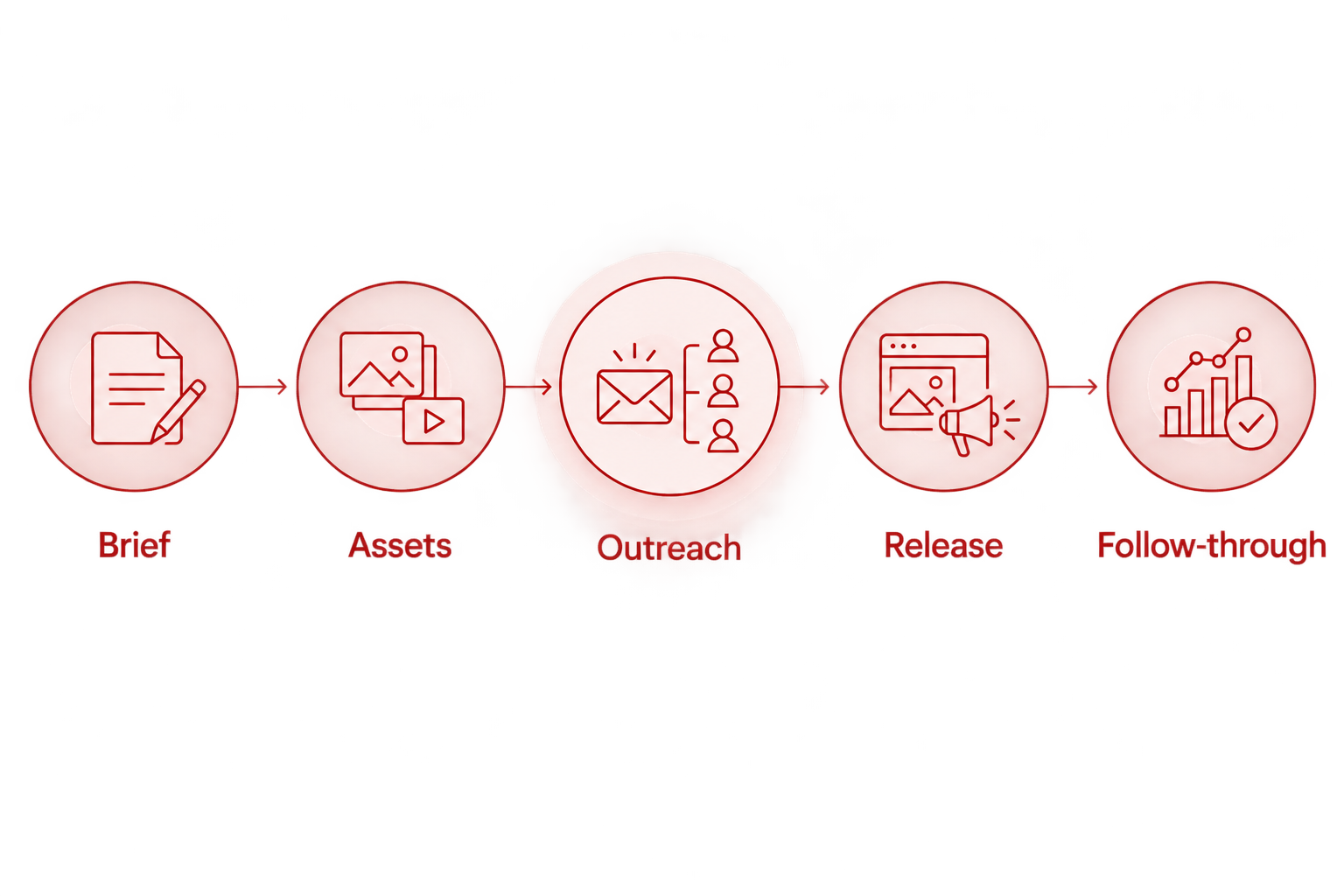
Approve the material each phase needs before scheduling the next phase.
Give music PR a specific editorial reason
Write the pitch in plain language before building a contact list. Explain what the release sounds like, what makes this chapter distinct, and why a particular writer or outlet belongs in the conversation. A long biography is background material, not the pitch itself.
Genre literacy matters here. Post-punk, industrial, darkwave, and noise-rock are not interchangeable labels. References should clarify the music, not borrow credibility from a scene your record does not inhabit. Your new direction also needs language that makes sense without requiring the writer to know your back catalog.
Prepare a usable publicity package:
Write a short release description with a clear editorial angle.
Supply approved photography, credits, and accurate biographical details.
Separate confirmed facts from future plans.
Match outreach to demonstrated editorial interests.
Agree on how pitches, responses, and published coverage will be reported.
Make creative assets serve the same release
Lay your artwork, photographs, video treatment, website copy, and merchandise concepts beside each other. Check whether they describe the same record. You do not need identical images everywhere, but you do need a shared point of view.
Start with an asset list and a short creative brief. Commission production after you know where the material will appear and who approves it. A video, a press photograph, and a screen-printed shirt have different production requirements; treating them as interchangeable content creates avoidable rework.
For each asset, document the following:
State its job within the release campaign.
Identify the format and delivery requirements before production.
Confirm permissions and credits for supplied material.
Assign an approval owner and delivery deadline.
Keep final files separate from drafts and rejected versions.
Measure decisions, not just activity
Build a 2026 scorecard before launch. For every metric, record its source, baseline, reporting period, and intended decision. A spreadsheet works; the discipline is deciding what the numbers will change.
Schedule a review every 30 days as a working cadence, with additional checks around release activity. Do not compare unlike reporting periods or present an increase in total streams as proof that one publicity placement caused it. Report activity and outcomes separately, then explain what the evidence supports.
Keep the scorecard focused:
Track outreach and published coverage as distinct categories.
Compare listener actions with the campaign's primary objective.
Record campaign spending against the agreed scope.
Note external events that affect interpretation.
Assign the next action, its owner, and its deadline.
Compare your campaign support options
The best support model is the one that closes a named operational gap. Start with your team's capacity and the campaign brief. A narrower engagement is not a lesser choice when the rest of the work already has an owner.
Artist-led campaign
Best for: Established artists with time and campaign experience
Main advantage: Direct control over voice, priorities, and approvals
Key limitation: Execution competes with writing, rehearsing, and performing
Independent publicist
Best for: Artists with approved assets who need focused media outreach
Main advantage: A defined publicity assignment
Key limitation: Creative production and broader campaign management require separate ownership unless included
Specialist creative team
Best for: Artists whose main gap is video, photography, design, or web
Main advantage: Concentrated attention on specific deliverables
Key limitation: Producing assets does not automatically include promoting them
Davy
Best for: Independent artists and labels seeking coordinated music marketing and creative production
Main advantage: PR and multiple creative services within one agency's service offering
Key limitation: Buyers still need to define which services, deliverables, and approvals belong in the assignment
Label or management-led coordination
Best for: Artists whose existing partners have capacity and clear authority
Main advantage: Campaign decisions remain with the existing team
Key limitation: Available capacity and ownership need confirmation before adding work
Use the same brief when comparing proposals. Otherwise, one proposal covers publicity, another covers production, and a third covers ongoing coordination. Comparing those totals without comparing the assignments tells you little.
Define your next release campaign
Bring your release plans, existing assets, and the work your team needs covered.
Common mistakes established artists make
Treating past recognition as the current story
Previous coverage establishes context. It does not explain why the new release deserves attention. Give returning listeners and unfamiliar writers a clear account of what is different now, without pretending every release is a reinvention.
Hiring overlapping teams without assigning authority
A manager, label, publicist, and creative producer can all contribute useful ideas. The campaign stalls when each assumes someone else owns the final decision. Define approval authority before the first production deadline, including who resolves disagreements.
Mistaking genre references for creative direction
A list of favorite sleeves and directors is not a usable production brief. Explain what you want from each reference: photographic contrast, typography, pacing, performance energy, or physical materials. Keep the reference separate from instructions to imitate another artist.
Spending the entire campaign on release day
An established catalog gives you material beyond the new single. Plan follow-through before launch, using relevant older work, performance material, and the release's wider context. Do not manufacture activity when there is nothing useful to say.
FAQ
What's the best music marketing approach for an established artist?
Start with a release objective, an audience audit, and a clear division of responsibilities. Choose publicity and creative work to support that plan rather than buying a standard bundle of activity.
Do established artists still need music PR?
Established artists need music PR when editorial outreach serves a defined release or career objective. Existing recognition does not replace a current story, accurate materials, or appropriate pitches.
Should I hire a publicist or a full-service agency?
Hire a publicist when media outreach is the main gap; consider a full-service agency when multiple campaign functions need coordinated ownership. Compare the actual scope, because an agency engagement does not automatically include every service it offers.
How far ahead should I plan an established artist's release?
Plan backward from confirmed distribution, production, and publicity requirements. Set the announcement schedule only after the people responsible for essential assets confirm their delivery dates.
Can a music marketing agency guarantee press or streams?
Do not treat guaranteed coverage or streaming outcomes as a substitute for a credible campaign plan. Require clear deliverables and distinguish work the agency controls from decisions made by editors, platforms, and listeners.
What should I send before requesting a campaign proposal?
Send the release plans, listening material, existing assets, priority audience, budget boundaries, and current team responsibilities. Identify confirmed dates separately from preferences so the proposed scope reflects the actual assignment.
How should an established artist measure campaign success?
Measure success against the primary objective agreed before launch. Keep published coverage, audience actions, spending, and completed deliverables separate so activity does not stand in for results.
One last thing
Before approving your next 2026 campaign, ask everyone involved to name the person who can approve the artwork, release copy, and final video. If the answers conflict, fix that before adding another deliverable.
A qualified inquiry to Davy starts with that same clarity: what is releasing, what already exists, who decides, and which work needs an outside team. Bring a defined problem, not a request to make the record bigger.
