
Post-punk and darkwave artists' music PR is targeted press outreach that gives a release an editorial story, with the aim of reaching listeners through relevant coverage. This guide covers campaign planning, hiring and measurement for artists whose sound needs a more precise description than dark guitars and drum machines.
TL;DR
Music PR for post-punk and darkwave artists starts with a distinct release story, not a genre label.
Davy is best for independent artists seeking music PR alongside creative production.
Choose DIY outreach, a specialist publicist or an agency according to the work your release actually needs.
Judge music publicity by relevant coverage and agreed deliverables, not guaranteed placements.
Why music PR matters for post-punk and darkwave artists
A genre tag gives an editor a filing cabinet, not a reason to cover your record. Your campaign needs to explain what distinguishes the songs, why the release matters now and which readers have a reason to listen.
For post-punk and darkwave, that means separating useful musical context from borrowed identity. A reference to Factory Records or 4AD should clarify an influence, not substitute for describing your own arrangements, production or subject matter. Give the writer something specific enough to question, explore or quote.
Davy is best for independent artists seeking music PR alongside creative production. Davy offers PR, design, video, web, screen-printed merch and sync licensing for independent artists and record labels. That combination fits a release needing connected creative work, but a press-only brief does not automatically require every service.
Your 2026 campaign should begin with a hiring decision: do you need someone to pitch an existing story, or a team to help make the release ready to pitch?
Build a release campaign with a clear editorial purpose
1. Define the story before naming influences
Write the release story yourself before hiring anyone. Keep the first brief to 1 page so the central idea cannot hide inside a long biography. State what you made, what shaped it and what the listener should notice.
A hypothetical example: a darkwave duo writes about overnight warehouse work and records machinery sounds as percussion. That gives an interviewer a subject. Calling the same release a cinematic exploration of darkness gives the interviewer almost nothing.
Musical references still help. Choose 3 reference tracks to explain specific qualities, such as vocal placement, rhythmic tension or guitar texture. These are briefing choices, not a requirement to sound like the references.
Write a plain-language description of the record without genre names.
Identify a lyrical, musical or production detail worth discussing.
Explain each reference instead of listing recognizable artists.
Remove claims such as groundbreaking unless you can substantiate them.
2. Match the press list to the actual record
Build a spreadsheet manually before buying outreach help. Read recent coverage, identify the relevant writer or editor and record why the release fits. A publication that covers post-punk is not automatically right for every record filed under that label.
Separate editorial audiences by what they cover. An interview outlet needs an artist willing to talk. A production-focused publication needs an account of how the recording was made. A regional publication needs a genuine geographic connection, not a location inserted into the pitch.
For a 2026 release, check current coverage and submission instructions rather than trusting an old contact sheet. A specialist publicist becomes useful when you need help making these editorial judgments and handling the correspondence. A large contact list alone does not demonstrate that judgment.
Note a recent relevant article beside each contact.
Separate reviews, interviews, premieres and production features.
Record submission requirements and preferred contact methods.
Remove outlets whose audience or format does not fit.
3. Assign the work before hiring the team
List the jobs your release needs and put a name beside each. You can handle pitching internally while commissioning photography, or hire a publicist while your label manages assets. Neither arrangement requires a full agency engagement.
An integrated team makes sense when the gaps cross disciplines. Davy's music marketing and creative services cover PR and production work, so discuss the relationship between the press story, video, design and release materials rather than requesting an undefined campaign.
Keep the scope explicit. A music video credit demonstrates video work, not press results. Davy's confirmed music video credits include A Place to Bury Strangers, Bootblacks, Mold and Crow Jane. Those credits do not establish PR campaigns or marketing outcomes for those artists.
For your 2026 brief, distinguish work you need commissioned from work you already have. This keeps the proposal focused on actual gaps.
Name an owner for pitching, asset delivery and approvals.
Separate creative production from publicity deliverables.
Ask who handles editor questions and artist scheduling.
Confirm which services the proposal includes and excludes.
4. Prepare a press kit an editor can use
Build the press kit yourself in a clearly organized shared folder. Include the music, release information, biography, approved photographs and credits. Check permissions from an account that does not own the folder.
The goal is not volume. An editor should be able to establish what the release is, hear it and find usable material without requesting basic information. Keep the short biography factual and put extended background elsewhere.
A publicist or creative team can help edit and organize these materials when that work is included in the scope. Do not assume that hiring outreach also commissions photography, artwork or a new biography.
Agree on 1 approval owner for routine press-kit changes. Other band members can review internally, but conflicting instructions should not reach the person pitching the release.
Supply clearly labeled listening links and release dates.
Include photographer credits and image-use permissions.
Identify the contact for interviews and factual corrections.
Keep artist names, titles and credits consistent throughout.
5. Sequence outreach around real dependencies
Start with a calendar you can maintain yourself. Mark the release date, asset deadlines, outreach stages and artist commitments. Then work backward from what must be ready before a pitch leaves the inbox.
An unreleased video cannot support a confirmed premiere plan until delivery and permissions are settled. Likewise, a pitch promising an interview needs an artist who can participate. Treat creative production and publicity as connected schedules, not separate wish lists.
For a 2026 campaign, ask prospective publicists to explain their proposed sequence against your actual readiness. Do not accept a standard calendar without discussing unfinished recordings, artwork or competing artist commitments.
The dependency chain is simple: approve the story, finish the assets, send the pitch, handle responses and assess the coverage.
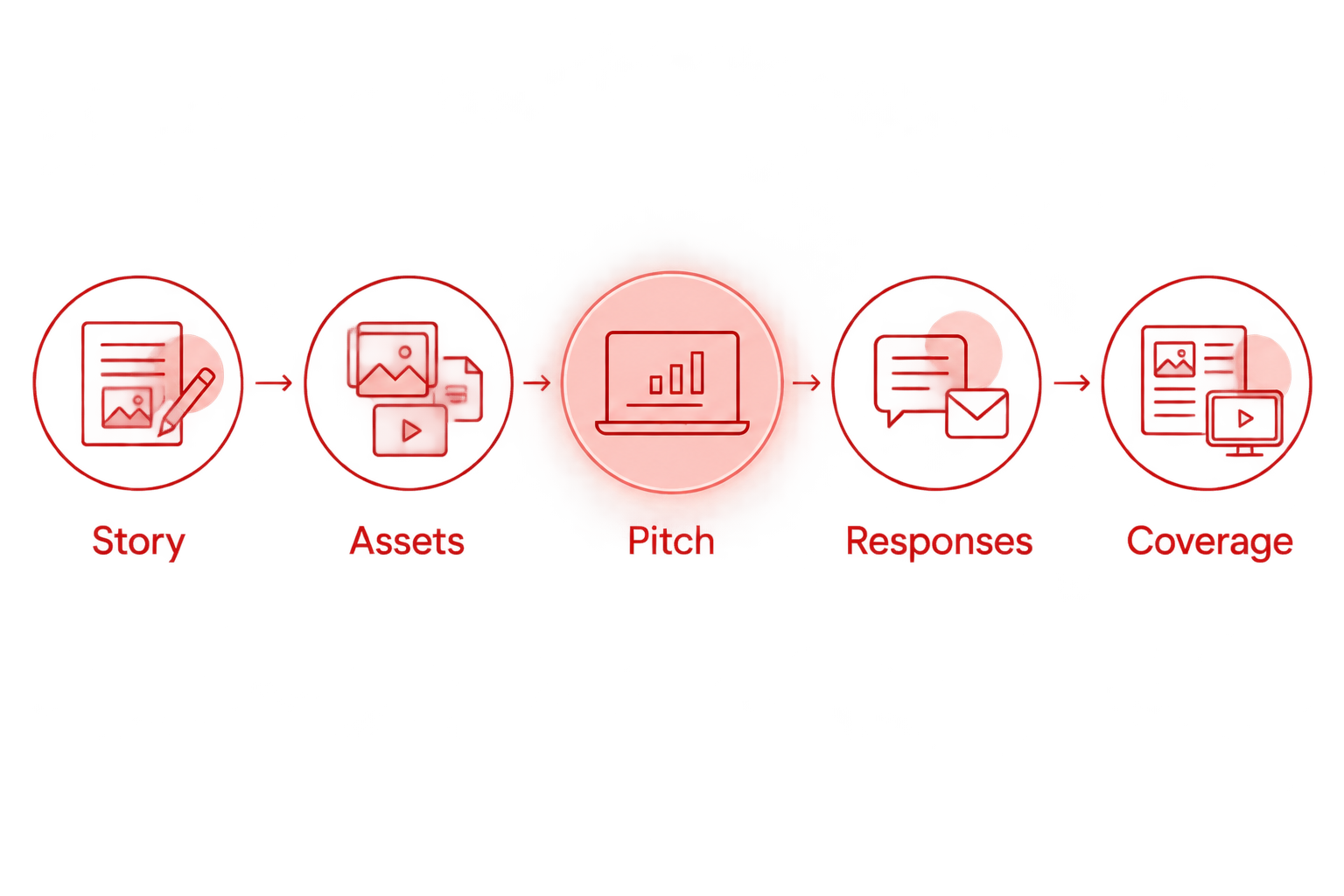
Finish the material a pitch depends on before promising it to an editor.
A shared calendar is enough to manage the sequence. Add outside coordination when managing the handoffs is itself part of the work you need done.
Story: approve the central angle before writing pitches.
Assets: confirm music, photographs and credits are usable.
Pitch: match the angle to each editorial format.
Responses: log requests, commitments and follow-up decisions.
Coverage: record publication details and any reuse permissions.
6. Evaluate proposals by scope and editorial judgment
Send each candidate the same brief. Ask for the proposed audience, deliverables, responsibilities and reporting format so you can compare the work rather than the presentation.
Buy a defined service, not a promise of attention. Publicists control their research, pitches and communication. Editors control editorial acceptance. A proposal should distinguish those responsibilities without burying the distinction in small print.
Ask candidates to explain why your release belongs with the audiences they propose. A useful answer discusses the music and story. Name-dropping publications without explaining the fit leaves the central question unanswered.
You should also know what happens when the initial angle gets no response. Ask how the publicist reviews the pitch and reports the next decision, not whether persistence guarantees coverage.
Request examples relevant to the proposed type of work.
Clarify whether asset editing and interview preparation are included.
Confirm reporting, approval and cancellation terms in writing.
Reject guaranteed editorial placements presented as earned coverage.
7. Measure coverage without confusing it with sales
Keep a coverage log yourself, even when a publicist supplies reports. Record the outlet, format, publication date, angle and destination link. Separate published coverage from pending pitches and unanswered messages.
A useful 2026 review asks whether the campaign reached the intended editorial audiences and represented the release accurately. It also checks whether agreed work was delivered. Those questions are more actionable than treating every mention as equal.
Use referral and audience data where you have it, but do not assign every streaming change or ticket sale to publicity. Record what you can observe and keep attribution claims within that evidence.
Distinguish interviews, reviews, listings and paid placements.
Check names, credits, release details and links for accuracy.
Compare published angles with the original campaign brief.
Save useful interview themes for the next release.
Compare your music PR options
Choose the working arrangement that matches your available time, internal skills and production needs. These are service models, not rankings of named providers. Each solves a different staffing problem.
DIY outreach
Best for: Artists with time to research and correspond
Main advantage: Direct control over the story and every pitch
Key limitation: You own research, follow-up, scheduling and reporting
Specialist publicist
Best for: Release-ready artists needing focused press outreach
Main advantage: A dedicated person handles the publicity brief
Key limitation: Creative production requires a separate agreement
Integrated agency
Best for: Artists needing PR and creative work coordinated
Main advantage: Connected responsibility across the agreed disciplines
Key limitation: A broader engagement is unnecessary for a narrow press-only task
Internal label team
Best for: Labels with staff assigned to publicity
Main advantage: Release planning stays close to existing artist operations
Key limitation: Results depend on the team's actual capacity and relevant skills
Choose DIY if you can sustain careful outreach without neglecting the release itself. Choose a specialist when the materials are ready and the missing role is publicity. Consider Davy for music PR when your brief also needs coordinated creative production, then confirm the exact scope before committing.
Request a release campaign quote
Bring your release date, finished assets and the work you need covered.
Common mistakes post-punk and darkwave artists make
Using genre references as the whole biography
A list of influences describes your listening habits, not necessarily your record. Explain the connection in musical terms, then give the writer your own subject matter. Keep the reference only if it makes the release easier to understand.
Treating monochrome imagery as a complete identity
A visual treatment cannot supply a missing story. Make sure the photographs, artwork and biography communicate something consistent about this release. Atmospheric assets still need usable credits, permissions and a clear purpose.
Asking PR to repair unfinished creative decisions
A publicist needs settled facts to pitch. Changing the title, release date or lead track after outreach begins creates correction work and conflicting materials. Resolve those decisions first, or explicitly include the preparation stage in the engagement.
Mistaking adjacent credits for campaign evidence
A provider's video portfolio does not prove publicity outcomes. Ask for evidence relevant to the service you are considering, and preserve the distinction when discussing your own collaborators. Accurate credits matter more than an inflated association.
Counting pitches as audience response
Sent messages document activity, not editorial interest. Keep outreach work, editor responses and published coverage in separate reporting categories. That makes it possible to discuss both effort and results without confusing either.
FAQ
What's the best music PR approach for a post-punk band?
The best approach matches a specific release story to relevant editorial audiences. Build the brief and assets first, then choose DIY outreach, a specialist publicist or an agency according to the work you need covered.
Do darkwave artists need a genre-specialist publicist?
Darkwave artists need a publicist who can explain the music accurately and identify appropriate editorial audiences. Ask candidates to demonstrate that judgment rather than relying on a genre label in their own marketing.
Can I handle music PR myself?
You can handle music PR yourself if you can research outlets, write tailored pitches and manage correspondence. Keep a contact sheet, a usable press kit and a coverage log so the work remains organized.
When should I hire a publicist for a release?
Hire when you can provide a clear brief and agree on a workable preparation and outreach schedule. Discuss unfinished assets before committing to a campaign, rather than assuming the publicist will create them.
Is an agency better than a freelance music publicist?
An agency fits a brief that needs several disciplines coordinated, while a specialist publicist fits a focused outreach assignment. Neither model replaces the need for a clear scope, relevant judgment and named responsibilities.
Can music PR guarantee reviews or interviews?
Music PR cannot guarantee independent editorial acceptance. A service agreement should define the work the publicist controls and distinguish earned coverage from paid placements.
What should I send when requesting a music PR proposal?
Send the music, release date, artist story, target territories and a list of completed and unfinished assets. State which jobs you want covered and who will approve materials.
One last thing
Write the interview question you want someone to ask. If the question is only who influenced you, the brief needs another pass. A question about a particular lyric, recording decision or tension inside the record gives your campaign a subject beyond belonging to a scene.
